


Image

The Dangers of National Repentance

"It's easier, more palatable, to condemn the sins of one's country—or more accurately, one’s neighbours—than to grapple with one’s own flaws."

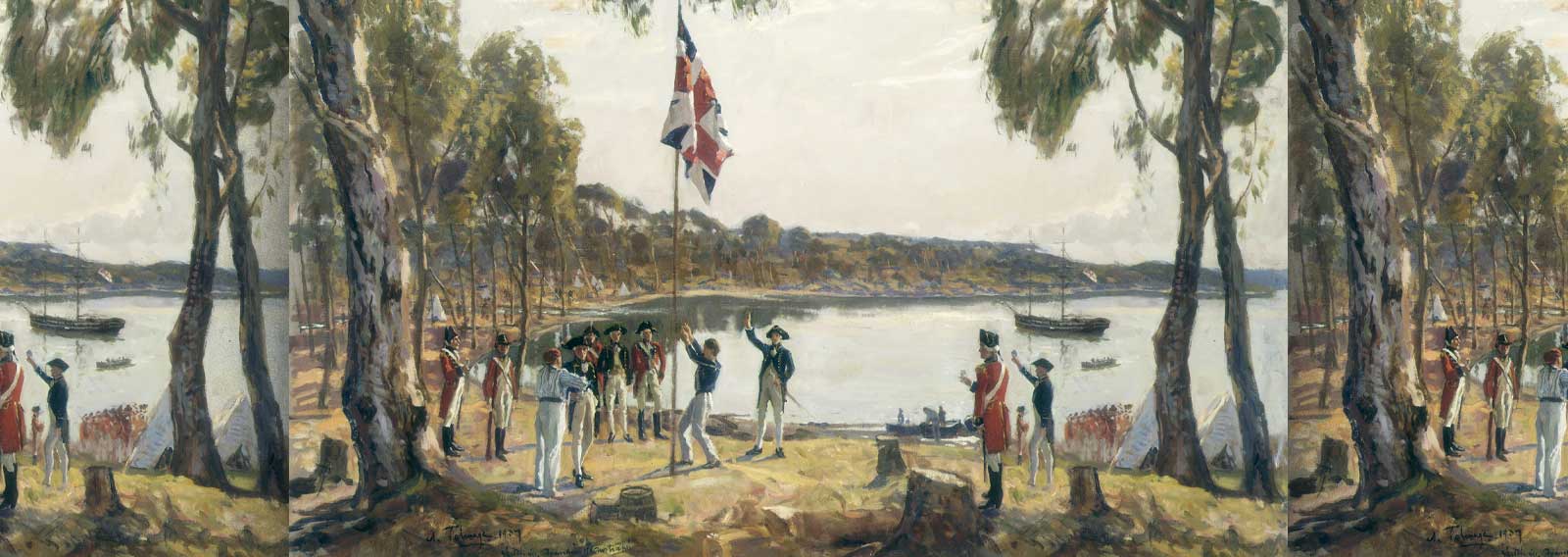
In his 1940 essay The Dangers of National Repentance, C.S. Lewis took aim not at the notion of repentance itself, but at a creeping distortion of it: what he calls “national repentance.” The concept is somewhat reminiscent of Australia’s “National Sorry Day,” an annual occasion for White Australians to reflect on how poorly their White ancestors supposedly treated the Indigenous people.

Originally published in The Guardian and later collected in volumes such as Undeceptions and Christian Reunion, the essay offers a poignant warning to Christians, particularly the young and idealistic, about the self-deceptions lurking behind these sorts of calls to repent collectively for a nation’s supposed inherited sins.

At first glance, Lewis admits, national repentance can appear noble. In the minds of many, it stands in contrast to the “self-righteous nationalism” so often blamed for war. In 1940, many young Christian intellectuals in England were eager to claim responsibility for the nation’s role in the growing global conflict. They seemed willing to share in the guilt of policies and decisions made long before they were of age, or even alive. Lewis, however, challenges this feigned humility as not only misguided, but dangerous.

He argues that “England” is not a moral agent but a civil society—its actions are those of its government. As such, when a young man repents for “England’s sins,” he is not confessing his own failures, but condemning others, often his political opponents or elders. The language of “we” used in this context, Lewis warns, masks a subtle evasion. By calling the government “we,” and not “they,” young Christians give themselves license to criticise others and their leaders uncharitably, all while cloaked in the virtuous garb of repentance and humble confession. Sounds familiar, doesn’t it?

The deeper danger, Lewis says, lies in this displacement of true personal repentance. It’s easier, more palatable, to condemn the sins of one’s country—or more accurately, one’s neighbours—than to grapple with one’s own flaws. Even worse, the supposed humility of national repentance often hides a self-righteous spirit. It becomes a way of enjoying moral superiority, of indulging in scorn toward those with whom one disagrees politically or culturally, especially figures who Lewis suspects might often resemble the penitent’s own father. It is, as Lewis has dubbed it elsewhere, a form of “Chronological Snobbery.”

True repentance, Lewis insists, is costly and uncomfortable. It demands we scrutinise our own hearts, not simply displace blame onto the faceless collective. The sins young Christians should be confronting, he suggests, are not foreign policy failures, but their own failings and the failings of their own generation.

Lewis ends his essay with an apt note to the Church. Yes, the Church has a duty to call for national repentance—but only from those who approach the task with reluctance and integrity. The one who criticises their mother for the sake of Christ may be righteous—if it is done with love, struggle, and sorrow. But if they enjoy rebuking her, then something darker is at work.

LISTEN (6:57 minutes):

Special Request:

For nearly eight years, we've highlighted issues ignored by mainstream media and resisted globalist ideologies eroding Western civilization. We've done this joyfully, without paywalls, despite personal costs to our team. Your support has kept us going, but operating costs exceed donations, forcing us to use ads. We’d love to ditch them, so we’re asking for your help. If you value our work, please consider supporting us via Stripe or PayPal. Every bit helps us keep fighting for our kids’ future. Thank you!

What's New?

Use the blue arrows at the bottom to scroll through the latest.
A Government Too Afraid to Name the Problem Can Never Fix It

A Government Too Afraid to Name the Problem Can Never Fix It

"Governments have become not only incapable but increasingly unwilling to acknowledge the simple and self-evident truth that some ideas are bad, and bad ideas inevitably produce bad behaviour."
By
by Ben DavisDec 16, 2025
16-Year-Old Explains Why the Social Media Ban Won’t Work

16-Year-Old Explains Why the Social Media Ban Won’t Work

"There are three very prominent concerns when it comes to how this law will actually work and the repercussions it could have."
By
by Selah CampisiDec 15, 2025
Bondi Massacre: A Wake-Up Call for Australia

Bondi Massacre: A Wake-Up Call for Australia

"Without honest discourse, decisive policy, and recognition that not all cultures can coexist harmoniously, such attacks are likely to recur—just look at Europe today."
By
by Staff WriterDec 15, 2025
White Guilt is Dead

White Guilt is Dead

"For decades, White guilt has been used as a tool of social control—silencing dissent, suppressing legitimate demographic concerns, and guilt-tripping Westerners into accepting policies that no other civilisation on earth would tolerate."
By
by Staff WriterDec 13, 2025
Brave New Families: How State Power Is Replacing Parental Responsibility

Brave New Families: How State Power Is Replacing Parental Responsibility

“All I see is the dystopian Brave New future that are projections of our simplistic mechanistic leaders, which makes sense, given their godfather is Karl Marx, a determinist who has bred many of his kind after his image.”
By
by Dr Stephen FysonDec 12, 2025
When the State Becomes Co-Parent: Australia’s Intrusion into Family Life

When the State Becomes Co-Parent: Australia’s Intrusion into Family Life

"As the state once absorbed the moral and spiritual leadership of the Church over society, so too can it absorb the moral and spiritual authority of parents over their children."
By
by Staff WriterDec 11, 2025
Tarantino Ranks ‘The Passion of the Christ’ Among the Best Films of the Century

Tarantino Ranks ‘The Passion of the Christ’ Among the Best Films of the Century

“I think it actually is one of the most brilliant visual storytelling films ever made,” he said.
By
by Rod LampardDec 11, 2025
Truth Tax: Senate Dissenters Reject Albo’s FOI Amendments as a “Hubris-Driven Attack on Transparency”

Truth Tax: Senate Dissenters Reject Albo’s FOI Amendments as a “Hubris-Driven Attack on Transparency”

"The consensus from dissenters seems to be that this bill further distances the Australian government from the people its representatives are elected to serve."
By
by Rod LampardDec 10, 2025

Image

Support

If you value our work and would like to support us, you can do so by visiting our support page. Can’t find what you’re looking for? Visit our search page.

Copyright © 2025, Caldron Pool

Permissions

Everything published at Caldron Pool is protected by copyright and cannot be used and/or duplicated without prior written permission. Links and excerpts with full attribution are permitted. Published articles represent the opinions of the author and may not reflect the views of all contributors at Caldron Pool.

Caldron Pool does not condone the use of violence, threats, or intimidation for political or religious purposes. We strongly advocate for peaceful, respectful, and free communication and open debate without fear of reprisal or punishment.