

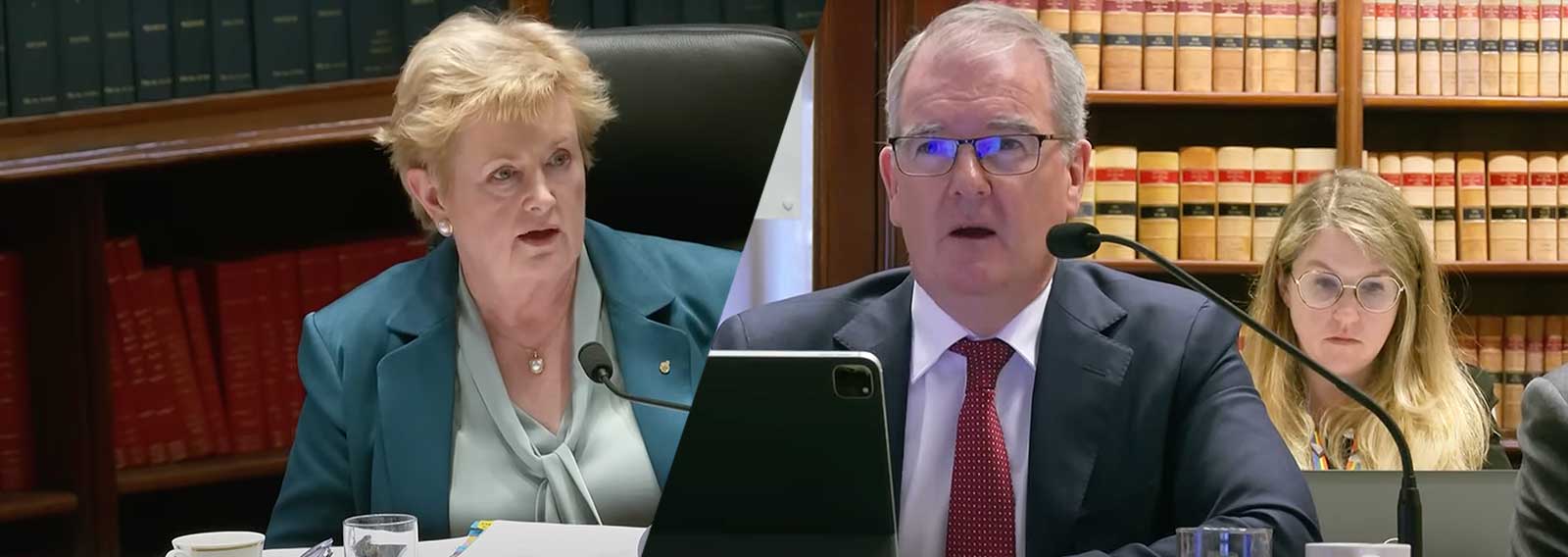
New South Wales Attorney General Michael Daley confirmed in Parliament last week that the state government has the power to dictate which prayers are lawful under its new Conversion Practices Ban.
During questioning, Susan Carter MLC pressed Daley on the implications of the legislation for people of faith.
“Do you support the right to freedom of religion?” Carter asked.
“Of course,” Daley replied.
“And does that include the freedom of people of faith to pray?” she continued.
“Yes,” Daley said — before qualifying that the law draws limits. According to Anti-Discrimination NSW guidance, “Praying with or over a particular person in an attempt to try to change or suppress that person’s sexuality or gender is unlawful.”
Carter responded: “That statement sounds like a prohibition on prayer, does it not? Prayer is lawful unless it is about a matter which has been declared to be unlawful.”
Daley rejected that framing. “You can pray with a person and do all those sorts of things. But if you pray in a way that it becomes… a sustained practice directed to a person with a view to changing their sexual orientation or gender, that’s against the law. If you’re sitting down praying with someone to strengthen them and guide them… that’s fine. But if you’re sitting down to pray the gay away, that’s not.”
Carter pressed further: “So just to summarise, you’re saying it is entirely appropriate for the New South Wales government to put limits on what lawful prayer can be.”
Daley answered: “Well, if it’s an unlawful prayer, then it’s not a lawful prayer. If it’s a prayer that’s actually not a prayer, it’s a conversion practice. It’s not lawful… The government can put limits on the behaviour of its citizens, regardless of what that behaviour is. And they do it in a myriad of ways every single day, whether it’s prayer or driving or dealing in drugs or assaulting other people. There’s nothing special about words coming out of a person’s mouth. The words that come out of a person’s mouth constitute a conversion practice [and] it’s an offence to the act.”
Carter raised the concern of ordinary believers: “Many people would see this as the government seeking to limit the freedom to pray. And this has raised great concern in certain sections of the community.”
Daley dismissed the charge, saying the Act makes clear prayer is not prohibited in itself, only when it aims to change sexuality or gender.
In other words, you may pray — but it is the government that decides what you can and cannot talk to God about.
Responding to Carter’s questioning, the Australian Christian Lobby issued a statement thanking her “for asking the questions no one else will” and for pressing the government on the implications of the legislation. The group said it would “continue to advocate for clear answers on this legislation and work to ensure that everyone has the right to pray without limitations.”
They also encouraged believers to draw strength from Acts 4:29: “Lord, consider their threats and enable your servants to speak your word with great boldness.” The ACL urged churches and Christian leaders to remain “bold and uncompromising in their commitment to God’s Word” as they navigate the new law.
Pastor Vaughan Smith, Minister of Taree Presbyterian Church and author of the Open Windows letter, criticised Daley’s remarks, saying they represent an unacceptable intrusion into religious life.
“Daley wants Christians to be assured that they aren’t policing prayer, all while he seeks to police our ‘conduct’ in prayer,” Smith said. “It’s an outrageous imposition on religious freedom. This legislation should simply be ignored by Christians throughout the state.”
Smith’s open letter opposing the conversion practices bill has attracted more than 2,000 signatures from church leaders and community workers. The signatories argue the law effectively criminalises common pastoral activities, including praying with individuals who wish to live in line with Christian teaching or offering spiritual guidance to children on matters of sexuality.