

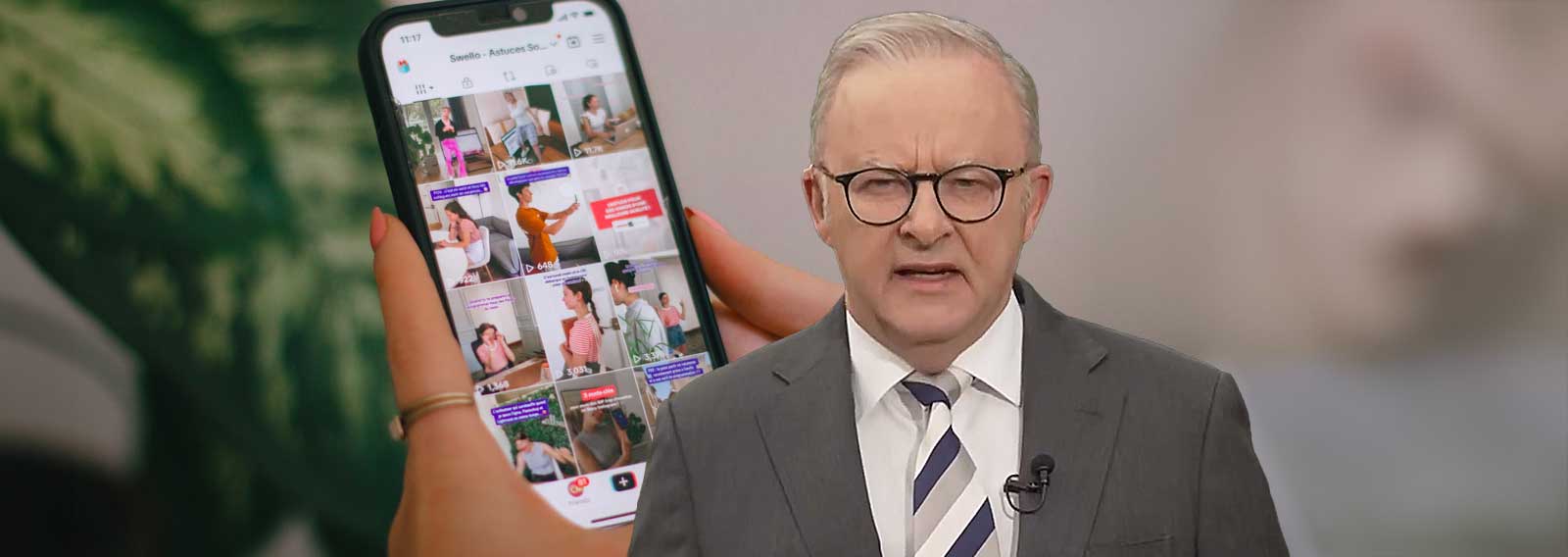
Are parents in Australia really so derelict that raising awareness of online dangers isn’t enough? Do federal and state governments truly need to insert themselves into the home by enforcing legislation that would prohibit children and teenagers from accessing social media?
The implicit claim is clear: they simply don’t trust parents to act responsibly unless the threat of legal punishment hangs over their heads.
But who asked politicians to tell us how to raise our children? We do not need laws policing kids’ screen time. This is a parenting issue, and parenting belongs to parents, not the state.
By all means, inform families about the risks of the internet. Equip parents with the knowledge they need to make wise decisions about what their children can access online. But when the government inserts itself into the home and begins to dictate what things our children can do, what people our children can associate with, what food our children can eat, and what books our children can read, then that’s a whole new danger within itself.
Let’s not pretend this is solely about protecting kids. These are the same politicians, applauded by the mainstream media, who shut down schools for months, confined children to their homes, and prohibited them from seeing friends, with psychological consequences still being felt today.
These are the same leaders who advocate irreversible “gender reassignment” surgeries for teenagers and made it possible for kids to get abortions without parental involvement in the process. And now we’re expected to believe their sudden concern is purely about child welfare?
The problem here is that the Australian government now justifies this intrusion by claiming that parents have asked for help enforcing house rules and screen-time limits. But we should pause and consider what is actually being proposed here: the state adopting a co-parental role over our children.
The government has only one instrument at its disposal—the sword. It governs by legislation backed with the threat of punishment. When the state “helps,” it does so by coercion. So what precedent are we establishing if we accept this logic?
Once the principle is conceded, there is no clear boundary left. All the government needs is a convenient pretext for further intrusion, wrapped in the refrain, “We’re just backing up parents.”
Oh, your children won’t eat their vegetables? Here’s legislation to back up parents.
Your kids don’t exercise enough? Mandated fitness routines to back up parents.
They sleep in on weekends? We have a law against that to back up parents.
They arrive home too late on school nights? Legal penalties to back up parents.
They’d rather watch videos than read books? Don’t worry, there will be a law against that to back up parents.
This is not a hypothetical slippery slope, but it is the logical end of the principle itself: that the state may supplant parental authority whenever it deems a family practice insufficient to its interests.
The state has already replaced the Church’s public moral authority, positioning itself as the ultimate arbiter of virtue, truth, and social order. What remains is the household. And as the state once absorbed the moral and spiritual leadership of the Church over society, so too can it absorb the moral and spiritual authority of parents over their children.
The last independent government standing is the family, and it, too, is now in the crosshairs.