

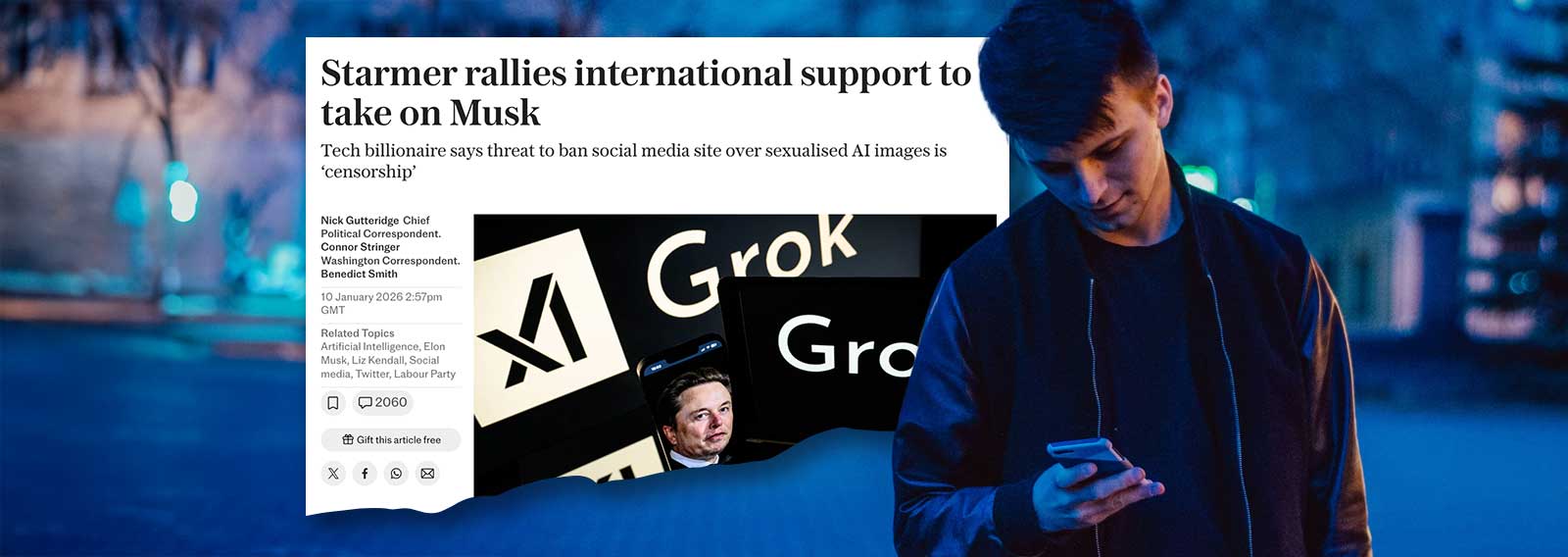
The UK government is reportedly working with Canada and Australia on a coordinated response that could lead to restrictions or a ban on the social media platform X. Ministers believe a joint approach would send a “powerful message” to X owner Elon Musk.
According to The Telegraph, discussions are taking place between “like-minded governments” amid concerns over the use of X’s artificial intelligence tool, Grok, to generate sexually explicit “deepfake” images, including images depicting women and children in bikinis. The issue has raised diplomatic sensitivities, with the report noting that the situation could escalate into a dispute involving the United States.
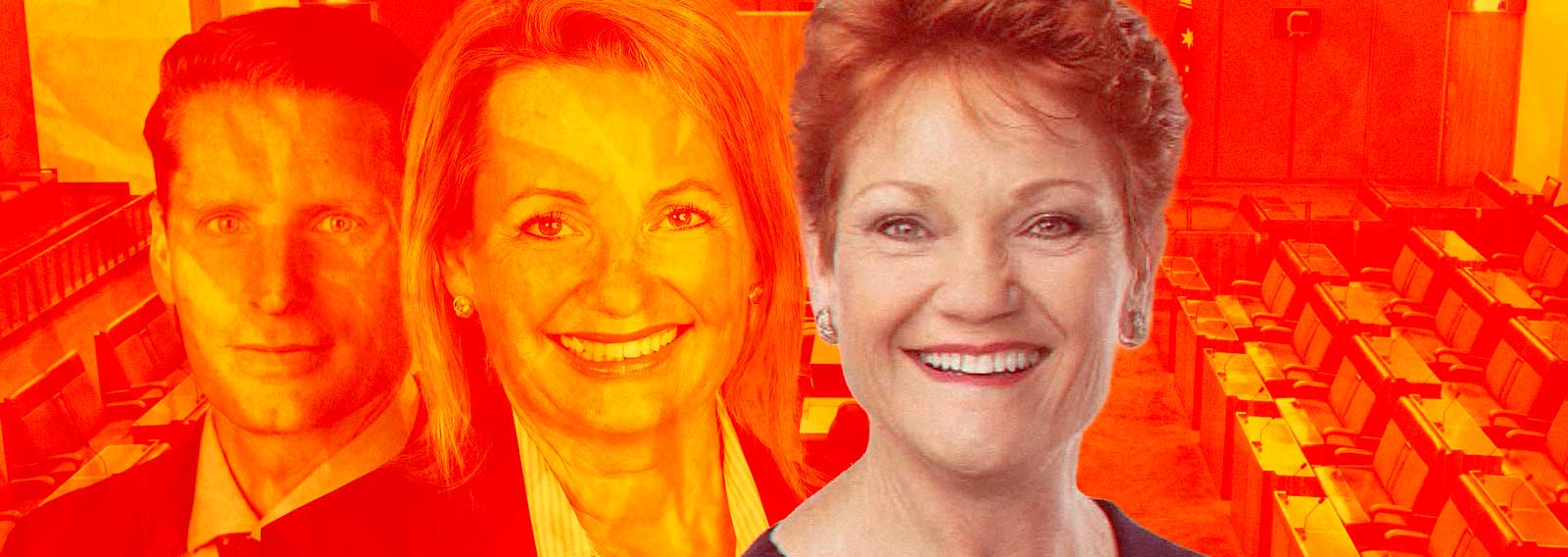
Australian Prime Minister Anthony Albanese described the use of AI image-generation tools for such purposes as “completely abhorrent,” arguing that it reflects a failure of social media platforms to demonstrate social responsibility. He said Australians and “global citizens deserve better.”
In the UK, the government has indicated it may use existing online safety laws to ban X entirely if the company does not remove features being used to create offensive images.
Elon Musk has seemingly rejected the proposed actions, characterising them as an attack on free speech. Responding to reports that U.S. senators have urged Apple and Google to remove X and Grok from their app stores over concerns about sexualised image generation, Musk said the “real reason” behind the pressure was hostility toward free expression.
Musk and others have argued that similar images can be generated using other AI systems, including Google’s Gemini and OpenAI’s ChatGPT, noting that Grok’s distinction is that it operates on X, a platform Musk owns.
In a post shared by Musk, GB News contributor Alex Armstrong claimed that deepfake content has existed across major platforms for years, including Facebook, Instagram and TikTok, and argued that X is being singled out for political reasons rather than content prevalence.
X has reported record usage figures, with approximately 120 million downloads per month for three consecutive months and the highest engagement levels in the platform’s history.
Yes, Elon Musk should ensure Grok cannot be used to undress people—especially children. This should not be a controversial view. Of course, governments hostile to speech they can’t regulate will inevitably seize on this issue as a pretext to ban X, but there is no reason to hand them an open goal.
Defending free speech is a fight worth having; defending the imagined right to digitally undress others is not. Free speech is worth defending, but it is not strengthened by protecting tools that enable exploitation.
Liberty collapses into anarchy when the people refuse to draw a moral line, and if we refuse to do so ourselves, our compromised governments will gladly draw it for us. Moral chaos always hands the government a pretext to expand its power over the people and regulate freedoms even further—especially free speech.
Free communication has always posed a problem for those who seek to centralise authority. Open platforms like X allow claims to be challenged, narratives to be contested, and power to be scrutinised. That is precisely why they become targets when governments feel uncomfortable, embarrassed, or threatened.
History shows that freedoms are rarely removed in one dramatic stroke. They are curtailed incrementally, justified by risk management and framed as necessary safeguards. Those who object are routinely dismissed as irresponsible, reckless, or indifferent to harm. Over time, what was once unthinkable becomes normal.
Every serious injustice can be cloaked in concern for the greater good. Even the most extreme abuses can be justified if fear is sufficiently cultivated and opposition sufficiently marginalised. As history and scripture alike remind us, power has always been willing to sacrifice truth and freedom on the altar of so-called public safety.
No injustice is off the table. Every human rights abuse can be cloaked in the language of social justice and concern for the greater good of society.
Even Jesus was crucified under the pretence of national security: “If we let him thus alone, all men will believe on him: and the Romans shall come and take away both our place and nation” (John 11:48).
Governments that suppress speech are never remembered as the good actors in history. They are remembered as tyrannical, hostile to their own people above anything else. But what must be understood is that tyranny does not initially announce itself with cruel and arbitrary force; it advances quietly, under the pretext of protection, until resistance is no longer possible.
As Albert Camus said, “The welfare of the people in particular has always been the alibi of tyrants, and it provides the further advantage of giving the servants of tyranny a good conscience.”