

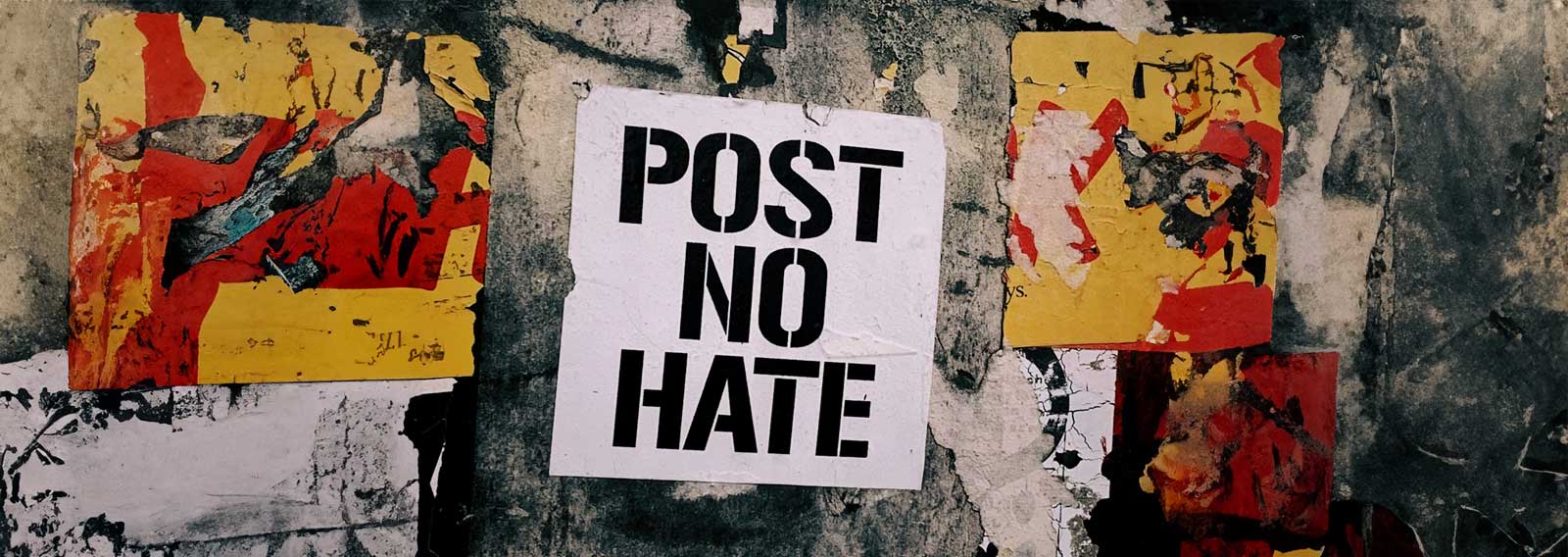
Our politicians have a great deal to say about hate. They condemn hate, legislate against hate, fund campaigns to combat hate, and warn that anyone guilty of hate will be punished. We are told that hate has no place in our society.
And yet, for all this moral certainty, they never provide a coherent or consistent definition of what hate actually is.
If hate is now an offence serious enough to get you fired, deplatformed, exiled from public life, or even imprisoned, shouldn’t we at least know what the word means? Shouldn’t there be a clear standard that distinguishes genuine wrongdoing from simple disagreement?
Previous generations did not face this confusion. Western nations, as historically Christian nations, understood hate as the opposite of love, and love itself was defined by the moral law of God. That framework provided clarity, consistency, and accountability. But once a nation discards God’s law as its ultimate moral reference point, what remains except the shifting preferences of those in power?
Having shirked the Christian worldview, Western nations have embraced pluralism and multiculturalism. And by definition, a pluralist society contains a plurality of moral frameworks. What one belief system calls love, another may call hate. What one tradition regards as moral, another may condemn as immoral. This is obvious and inevitable.
So how, in such a landscape, do our politicians claim the authority to police hate? What definition are they using? And according to which moral, or religious, standard?
The truth is, they have none. Many in power now function as a religion unto themselves. Hate becomes whatever contradicts their worldview, whatever obstructs their agenda, whatever threatens their desired ends.
In effect, the state has assumed the role of the church. In many Western nations, it is the new clergy, defining virtue and vice by decree, demanding obedience to its doctrine, and punishing dissent as heresy.
Consequently, without an objective standard, the definition of hate shifts. It becomes not a violation of fixed moral truth, but a label attached to whatever challenges the interests, narratives, or priorities of the ruling class. This is why justice now appears so selectively applied. There is no consistency, only convenience—and that inconsistency emboldens genuine offenders, who can hope for leniency or exemption if their crimes align with the politics of the moment.
This is the world our elites have fashioned—a society governed not by a transcendent principle, but by political preference.
The Western world did not rise to greatness by accident. Its achievements were the product of Christianity’s long, formative influence on specific peoples over centuries. That is why Scripture has long been regarded as the moral foundation of Western civilisation. Undermine the foundation, and the structure inevitably weakens. Continue eroding it, and eventually the whole house collapses.