

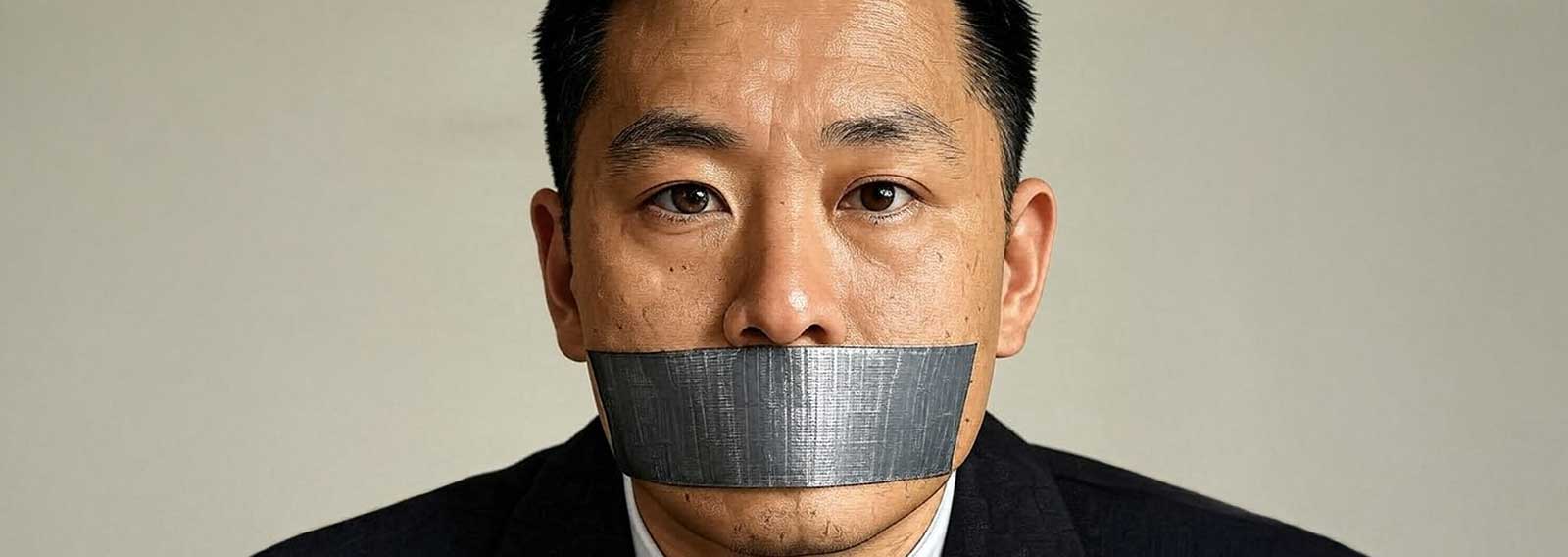
Chinese Communist Esafetyism has banned online evangelism.
18 new restrictions—called Regulations on the Online Behaviour of Religious Clergy—were issued by the CCP in a manifesto last month.
Underground persecution watch Bitter Winter (BW) described the crackdown as a tightening of the CCP’s “digital leash on Christian clergy.”
This has, BW explained, all the signs of “a deliberate attempt to unplug the sacred from the social.”
“The clergy may still speak—but only through the Party’s megaphone.”
Summarising the 18 Chi-comm fiats (Codes of conduct), BW said the “regulations were not just about behaviour—they were about ideological alignment.”
“The clergy are required to uphold the leadership of the Communist Party.”
As per Article 2, the clergy are also expected to “promote socialist values, and support the ‘Sinicisation’ of religion—a term that, in practice, means aligning religious doctrine with state ideology.”
The CCP’s new Regulations on the Online Behaviour of Religious Clergy, BW stated, “effectively criminalises spontaneous religious expression online.”
Additionally, the restrictions “isolate clergy from global religious discourse, and places sacred speech under the watchful eye of state censors.”
While not the first time the CCP has tightened its grip on “religious life, it is one of the most technologically invasive,” BW added.
The Christian content hardest hit is from digital ministries, which stream sermons and provide essential teaching material.
This “is less ‘freedom of belief’ and more ‘freedom to believe what we tell you, quietly, offline, and preferably in Mandarin’,” BW concluded.
According to the National Religious Affairs Administration’s edict, the manifesto is about “maintaining order.”
As such, Churches must “accept government supervision and social oversight.”
Any “clergy engaging in online activities outside their official capacity must follow national laws, regulations, and relevant rules on religious affairs management.”
When signing up to use platforms and share information, Church leaders will be “required to submit their clergy certificates to internet service providers for verification.”
Article 6 bans promoting content, and outlaws the “use of religious topics and content to attract attention and traffic.”
This is to ensure “good online habits” and prevent “negative online culture.”
Such as criticisms of Maoism and the Chinese Communist totalitarian state.
For example, Article 7 declares that nothing posted online “should contain content that incites subversion of state power.”
Nothing can be shared, posted, or created that “opposes the leadership of the Chinese Communist Party, or undermines the socialist system.”
Included in this list is any online content considered by the CCP to be a threat to “national unity, ethnic harmony, and social stability.
Or, any content that “interferes with the enforcement of national judicial, educational, marriage, and social management systems.”
In other words, the only allowable social media content is content that approves of, or is approved by, the state.
Missions or contact with missionaries are also out.
“Religious clergy must not collude with foreign forces over the internet, nor support or participate in foreign religious infiltration activities.”
The Chinese Communist Esafetyism ban on evangelism applies to “minors.”
Using the “protection of minors” as a reason to ban conversion, Article 10 states,
“Religious clergy must not spread religious ideas or induce religious beliefs in minors through the Internet.”
Neither are they allowed to organise youth groups, camps, education, training, or encourage kids to participate in “religious activities.”
The remaining articles cover regulations for monetisation, AI generative content, and discrimination.
While not specifically mentioned, bans on loosely defined hate speech, fake news, and open debate are all strongly implied.
Punishment for breaching these online restrictions ranges from pastors being imprisoned to their churches being demolished.
Responding, International Christian Concern (ICC) said China’s Christians “are learning how to navigate this increased censorship.”
Through Mission Network News, Bibles for China boss Kurt Rovenstine gave more context.
“The new regulations,” he said, are a natural progression of where the CCP is taking the nation.”
It’s disappointing, Rovenstine added.
“Because the regulations not only affect the churches in China, but it is targeting a lot of people who are working outside of China and trying to get content into China.”
“Walking the line between Communist restrictions and following Christ will require creativity and risk.
“Ask God to give Chinese Christian leaders courage and inspiration to know what to do,” he requested.
Rovenstine then encouraged Christians “to pray for tenacity in meeting the new challenges” to the Gospel.