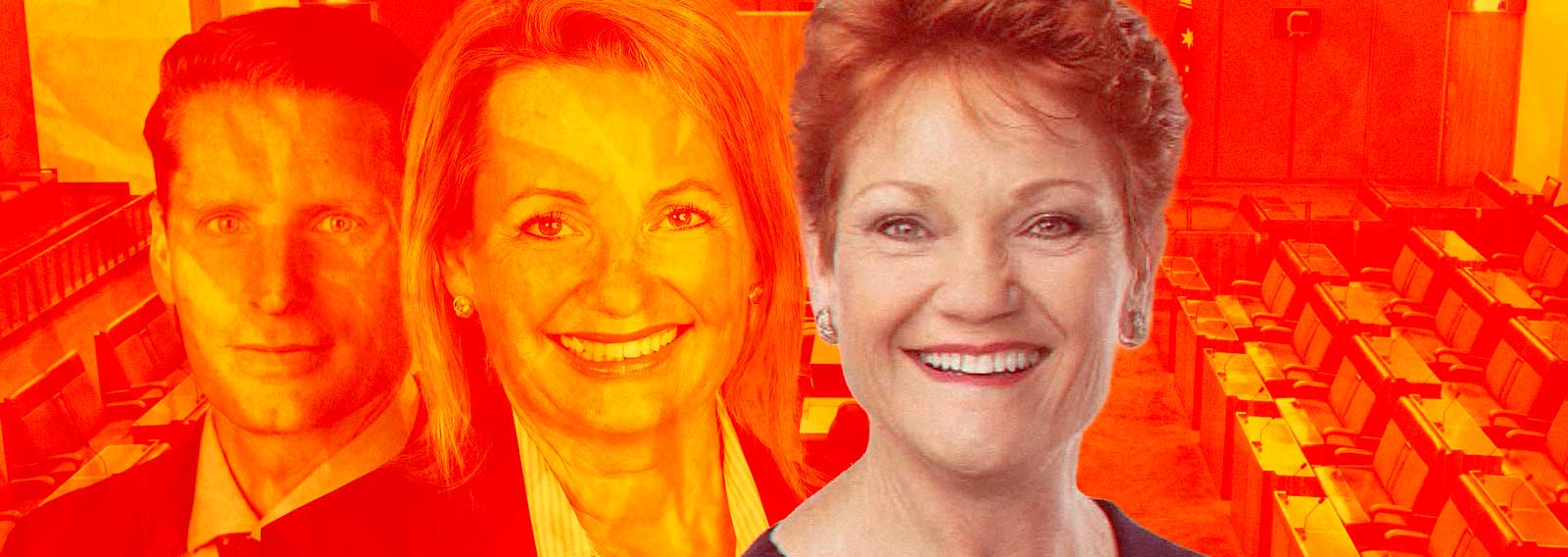


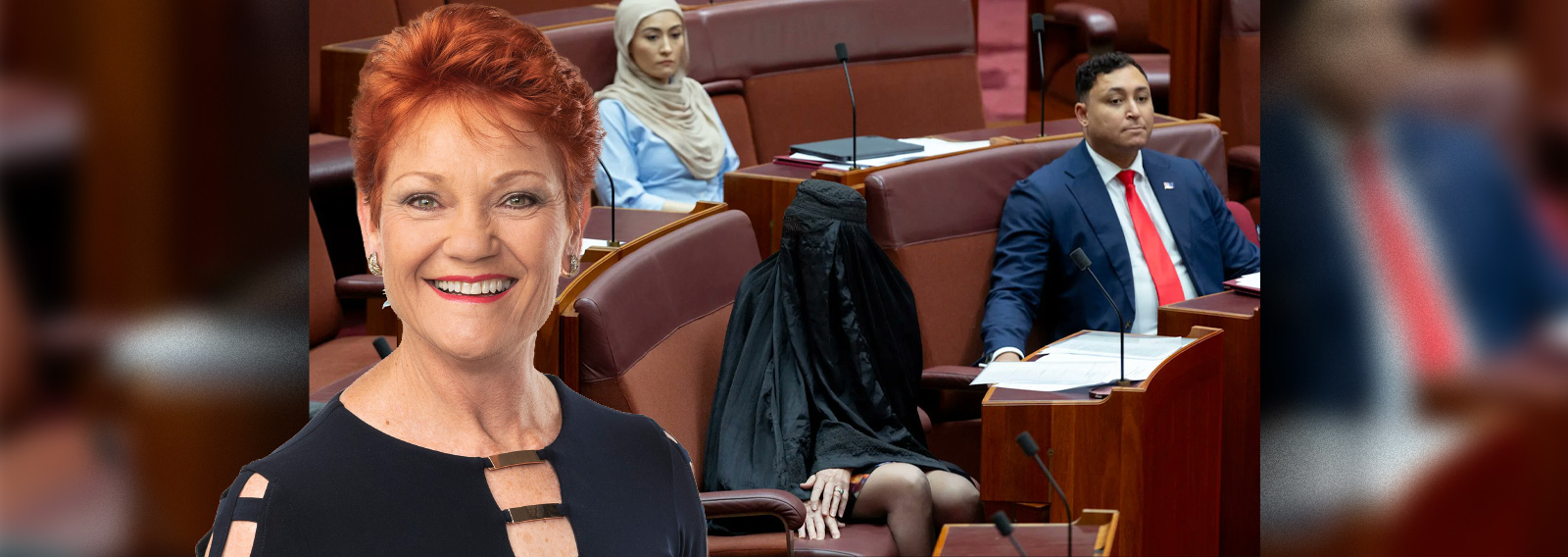
The Australian Senate was “thrown into chaos” for more than an hour and a half after One Nation’s Pauline Hanson entered the chamber wearing a burqa, halting debate in the final sitting week of the year. Hanson, who has long called for a nationwide ban on burqas and face coverings, was promptly sanctioned and barred from the chamber for the rest of the day.
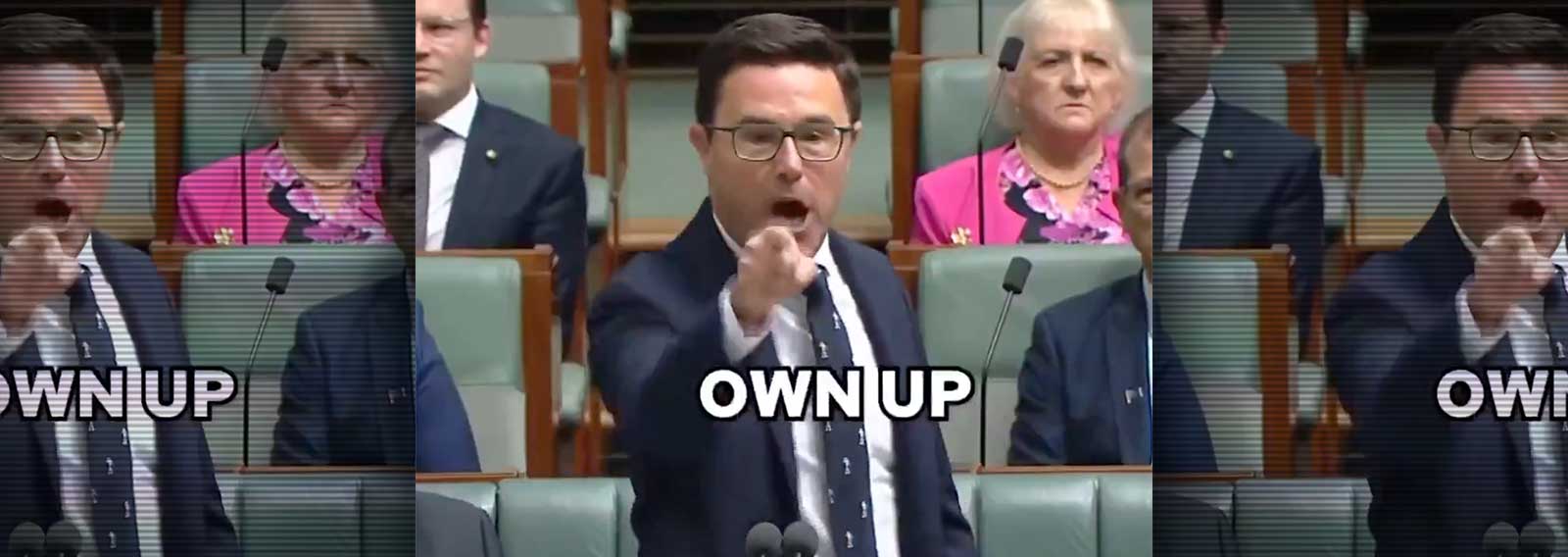
Predictably, those who have spent years opposing One Nation seized the moment to denounce Hanson for her “offensive stunt,” suddenly appalled at the thought of offending religious sensibilities. This outrage rings hollow, especially given how often Australian political leaders, including the Prime Minister, have happily participated in events notorious for openly mocking Christianity. The selective piety here is hard to miss.
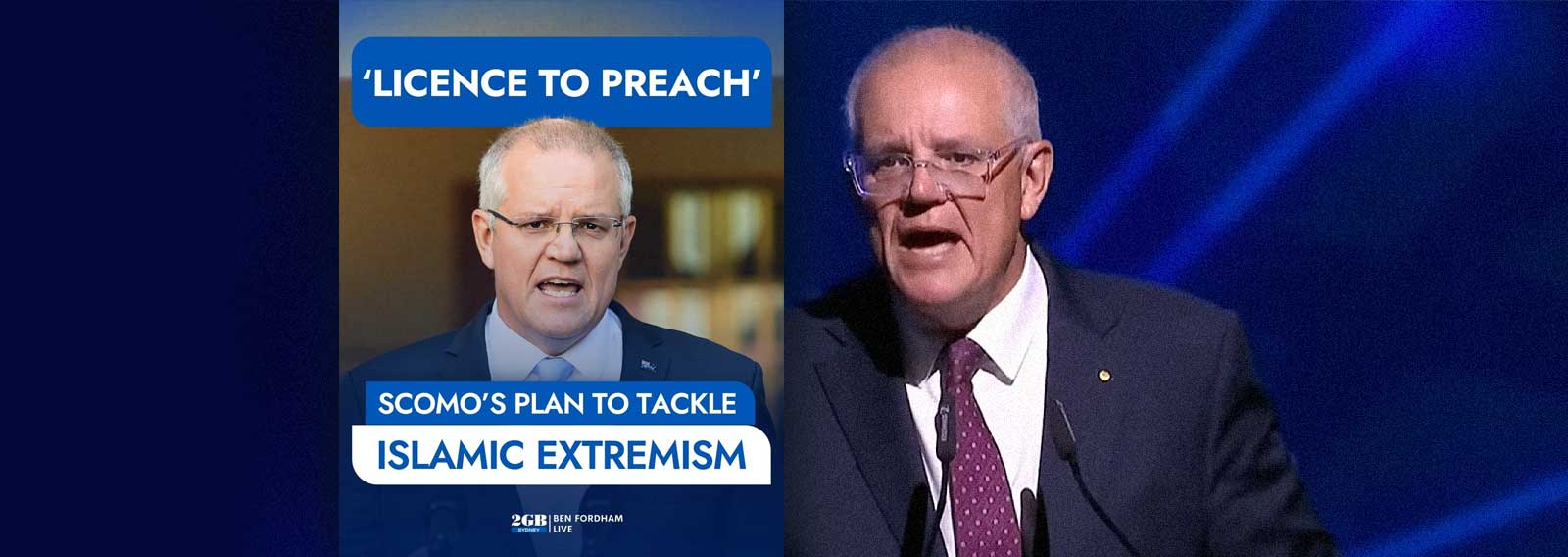
Here’s just one disgraceful example:
Critics have labelled Hanson’s act “racist” and “Islamophobic,” insisting the burqa is sacred religious attire and must not be worn for insincere purposes. Yet the reaction to Hanson inadvertently underscores and highlights the very point she has been making for years.
Hanson argues that the burqa conceals a person’s face. It obscures identity. That makes it uniquely vulnerable to misuse. We already ban full-face coverings—motorbike helmets, masks—from banks and government buildings. We recognise that anonymity can be exploited, not only by those who might want to commit crimes, but by fugitives who have already. But for the burqa, exceptions are made, as though someone prepared to commit a crime in a helmet would be morally incapable of doing so in a religious veil.
But what prevents someone from wearing a burqa for non-religious, even disingenuous or criminal reasons? What stops a fugitive from using it to avoid identification? If the law permits it, no one can challenge them. No one would dare to. That is Hanson’s point—setting aside arguments about what is or isn’t “UnAustralian,” or whether Australia is a Christian country.
The very criticism levelled at Hanson, that she wore the burqa disingenuously, proves precisely what she is warning about. Her opponents admit, by their own outrage, that the garment can be misused. And Hanson was banned from the Senate for that very reason. Yet outside the chamber, the same possibility is dismissed as unthinkable.
We cannot ban all “disingenuous people,” nor can we reliably determine who is wearing a burqa “sincerely” and who is not, nor should we have to wait until some horrible thing happens that forces us to reconsider. There is no practical way to know. Hanson’s argument is that only a universal, across-the-board policy solves the problem. Her critics, in expressing outrage at her stunt, have conceded the problem, just not the solution.