

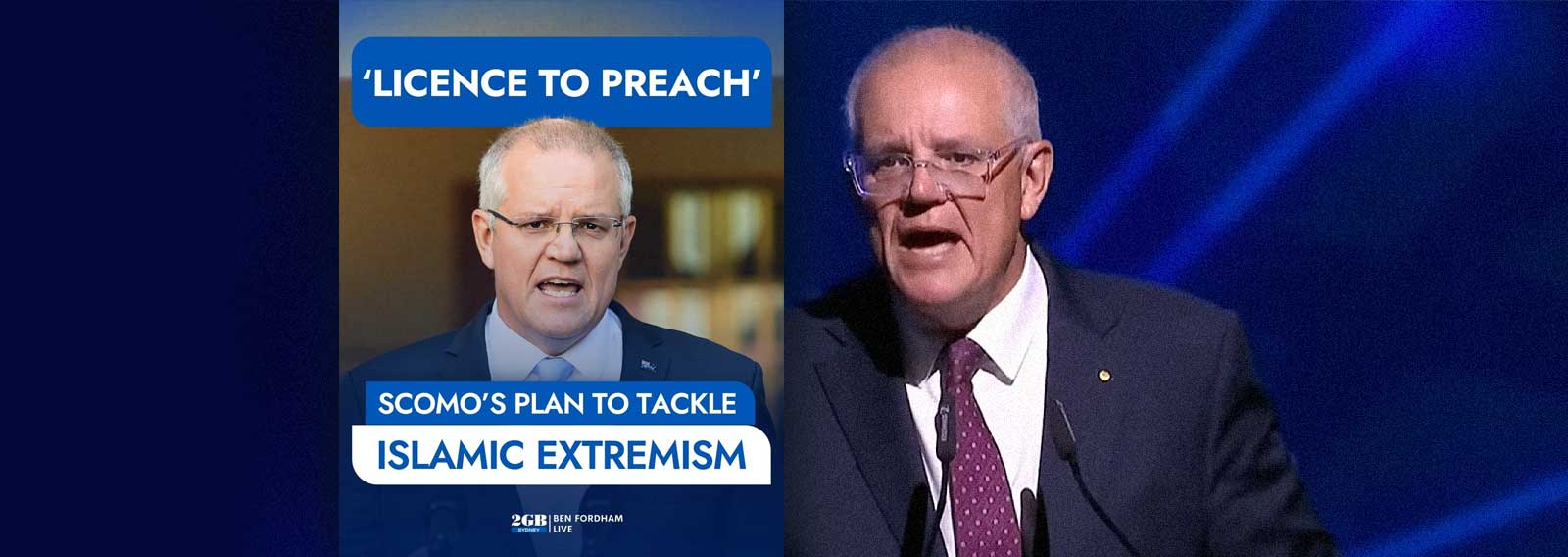
Former Australian Prime Minister Scott Morrison has proposed a plan to address Islamic extremism and “antisemitism” by requiring imams to be formally accredited. In effect, Islamic preachers would need a government-issued licence to preach.
According to The Australian, Morrison outlined his proposal as such:
“It is time for nationally consistent, self-regulated standards: recognised accreditation for imams, a national register for public-facing religious roles, clear training and conduct requirements, and enforceable disciplinary authority,” he said.
“Safeguarding, financial accountability and scrutiny of overseas funding must also be strengthened.”
The response has been divided. Some see the proposal as a pragmatic response to a genuine security concern. Others warn that state-regulated religion is a recipe for disaster. Critics note that once the state claims authority to license Islamic preaching, it is only a matter of time before the same practice is applied to Christian churches.
That’s a concern not to be dismissed as paranoia. It’s a proper recognition of how power works.
Morrison’s suggestion is only defensible under one very specific condition: that the government is willing to legally recognise Christianity as the foundation of law, freedom, and moral order. Without this, the proposal collapses into outright statism.
This would be necessary because the state cannot regulate religion from an a-religious or “neutral” position. Such neutrality does not exist. Regulation always presupposes a standard, and standards are moral. Moral standards are, by definition, religious.
To be clear, no one disputes that “religion” must be regulated to some extent. We do not allow individuals or groups to justify any behaviour whatsoever by appeal to religious conviction. Practices such as polygamy, female genital mutilation, and human sacrifice are rightly criminalised. Even at the most basic level, governments already punish preachers, of any religion, whose sermons are defamatory or incite violence or terrorism.
But these limits are not imposed arbitrarily. They reflect an underlying moral order.
And yet, modern governments insist they are secular and therefore religiously neutral. This claim is both incoherent and impossible. There is no such thing as an a-religious state. Every legal system rests on ultimate assumptions about authority, morality, and law.
Religion deals in moral oughts. You cannot assess or judge one moral claim without appealing to another. Secularism does not escape this reality—it simply substitutes its own theology.
Secularism is not opposed to religion as such. It is opposed to Christianity, specifically the faith that affirms the sovereignty of God over man and the limitation of earthly power under divine law. In its place, secularism enthrones man, and ultimately the state, as supreme.
This is why secularism has its own doctrines to enforce and its own morality to uphold. It replaces God with the state, and the church with bureaucratic authority. History demonstrates, again and again, that this substitution has produced some of the worst horrors ever inflicted by man upon man.
This outcome is inevitable. When the state refuses to acknowledge any authority above itself, it grants itself an unrestrained licence to play god.
Remove Christianity as the moral foundation of law and government, and you remove the very idea that governing authorities are bound by limits external to themselves. Once that happens, regulation of religion becomes regulation by religion—the religion of the state.
This is why Morrison’s proposal will only work while preserving freedom if, and only if, the government explicitly recognises Christianity as the source of liberty, law, and moral restraint. If it refuses to do so, the proposal is not just misguided; it’s dangerous.
Without formally recognising Christianity, accrediting imams today easily becomes accrediting pastors tomorrow. From there, it is a small step to state-sanctioned sermons, state-issued Bibles, state-regulated songs, and state-approved prayers.
This is precisely what has occurred in Communist China, where Christianity is tolerated only insofar as it serves the interests of the state. The church exists by permission, not by right—and that permission is withdrawn whenever allegiance to Christ conflicts with allegiance to government.
None of this requires the state’s establishment of a particular Christian denomination or micromanagement of the church. The state has no authority to dictate modes of baptism, prescribe prayer books, or determine sermon themes.
What is required, however, is far more fundamental: an acknowledgement that the moral framework of our laws is Christian, that governing authorities are under God, and that both rulers and citizens are bound by the limits of Christian love as defined by God’s law.
It’s something akin to what C.S. Lewis described as Mere Christianity—a shared moral grammar that restrains power and evil rather than unleashing it.
Morrison is right to recognise that not all religions and ideologies are equal. But his proposed solution only underscores that we now have a state seeking moral authority without moral accountability.
If the government insists on regulating religion while denying Christianity as the nation’s foundation of law and liberty, it will not protect freedom. It will erode it. The choice is not between regulation and chaos. It is between a state restrained by God’s law and a state that recognises no restraint at all.
Only one of those paths leads to genuine freedom.
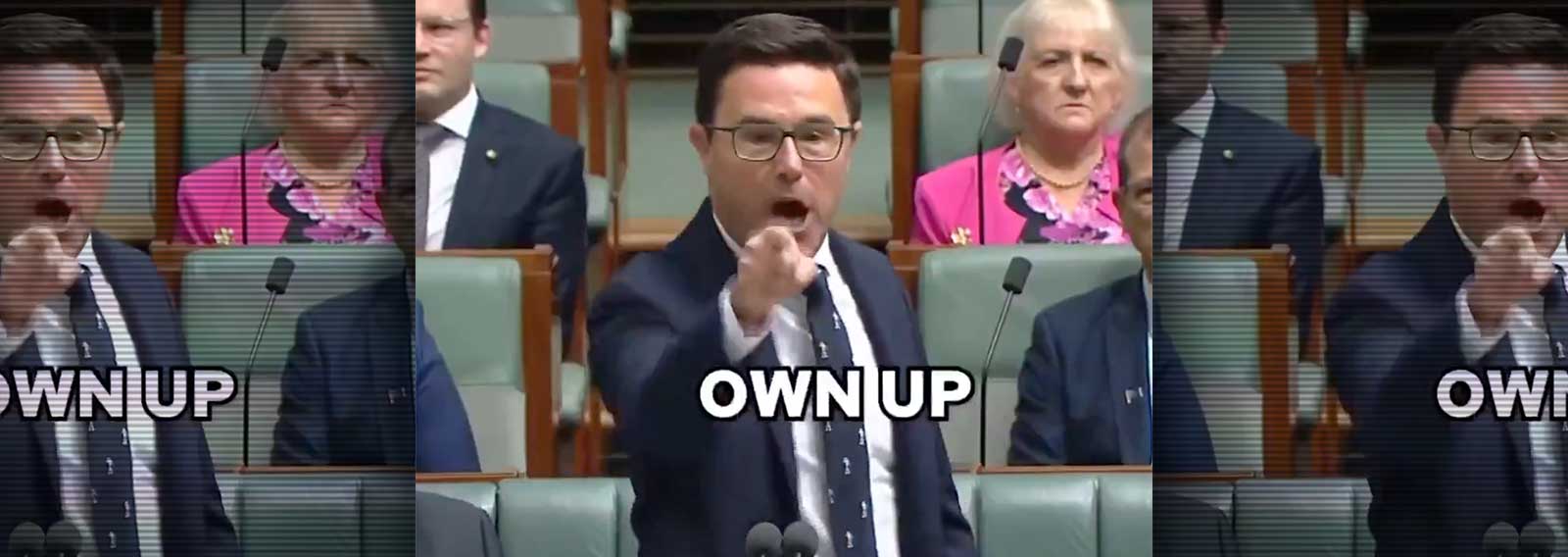
You can watch Morrison’s full speech below: