

The UK’s Shadow Justice Secretary Robert Jenrick has come under fire after describing parts of Birmingham as among the “worst integrated places” he has ever visited.
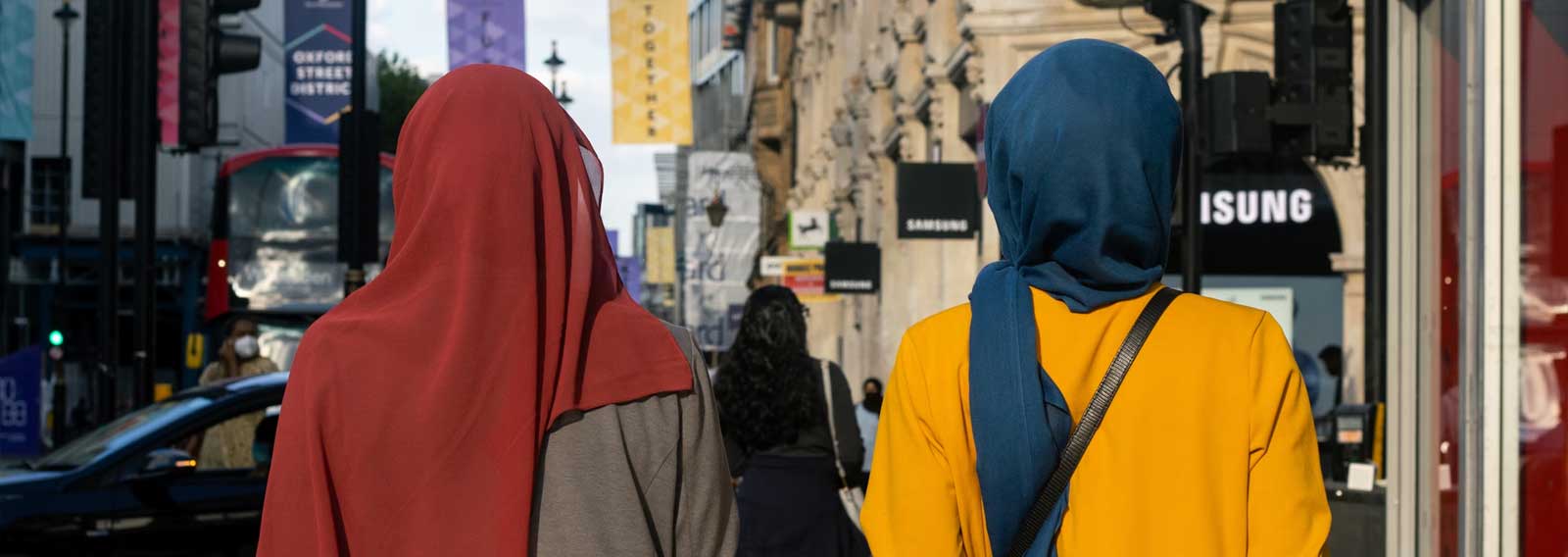
Jenrick said that while filming in the city, “in the hour and a half I was there, I didn’t see another White face.” He added that “we mustn’t have growing communities where people are living essentially ghettoised lives.”
🚨BREAKING: Robert Jenrick accused of racism for claiming Birmingham has "no white faces," risking racial hate crime charges.
— The British Patriot (@TheBritLad) October 7, 2025
Meanwhile, Muslim Humza Yousaf says Scotland's leadership has "too many white people."
Another two tier system in play. pic.twitter.com/Pg06BxxGyc
West Midlands Mayor Richard Parker called the remarks “shocking and disgraceful,” urging Jenrick to apologise.
During an interview on Sky News, Jenrick defended his comments, saying the backlash illustrates the very problem he was highlighting—an unwillingness to have open and honest conversations about social integration.
“I’ll tell you what gives rise to extremist views,” he told Sky News. “It’s journalists like yourself trying to shut down legitimate debate. If we live in a country where people can’t even discuss integration, that’s what fuels extremism.”
The reaction to Jenrick’s comments reveals a glaring inconsistency in how discussions about “representation” and “diversity” are framed. When Scotland’s former First Minister Humza Yousaf, then Justice Secretary, addressed the Scottish Parliament in 2020, he noted that at “99% of the meetings I go to, I am the only non-White person in the room.” His comments were widely praised as highlighting structural inequality.
Evidently, expressions of concern about underrepresentation are celebrated in one direction but condemned in another. You’ll be applauded as a champion of “diversity” for lamenting the absence of non-Whites, but condemned as a “racist” if you say anything about the absence of Whites. Could it be any more obvious?
Of course, Jenrick’s remarks, and the reaction they’ve provoked, have highlighted a question that many have been asking for years: Is the goal genuine inclusion, or is it the selective acceptance of only certain kinds of diversity?
What’s becoming increasingly evident is that the term “diversity” is often a euphemism wielded to obscure an agenda. It sounds inclusive and tolerant, but in practice, it frequently targets a collective of Whites as a problem to be “fixed.” Diversity, in this context, often means reducing the presence of White people. This sleight of hand allows proponents to deflect criticism: when challenged, they accuse opponents of bigotry.
Jenrick didn’t claim there were “too many brown people”—he merely pointed out the absence of White people in a specific context—England! Yet, this alone branded him a racist. This reaction exposes the agenda: the goal isn’t diversity but the marginalisation of Whites. The rules are clear—wanting to preserve any White presence, whether in the British Isles or elsewhere, is now deemed unacceptable. Whites are sidelined as a national majority and simultaneously as a global minority. The game is rigged.
So why play by their rules? Why engage in their bad-faith accusations? When they hurl “racist” at us, we shouldn’t scramble to prove our innocence, citing non-White friends or admiration for other cultures. This perpetually defensive posturing only empowers their narrative. It’s time to stop playing their game altogether. Their accusations of racism aren’t about principle—they’re a tactic to silence dissent. The real “prejudice” lies in viewing White presence as inherently problematic. That’s “racist”—they just don’t care.