

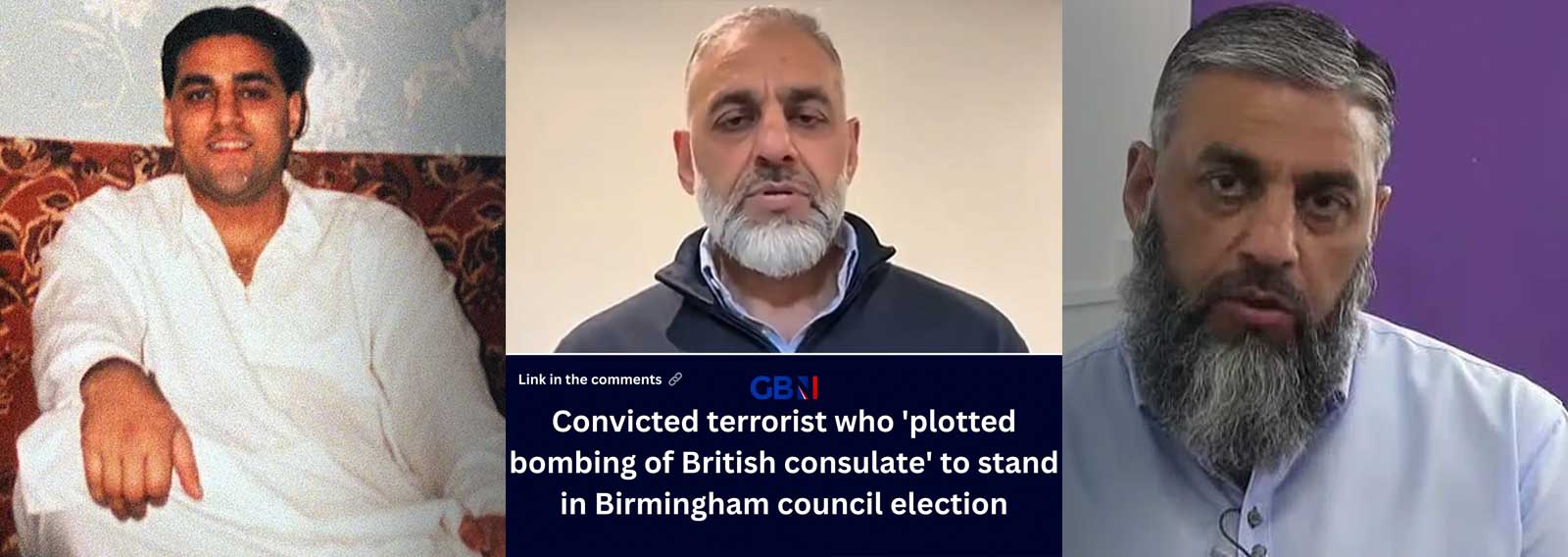
A convicted Islamic terrorist who once described jihad as a “compassionate act” is now on track to become a councillor in the United Kingdom. And we are expected to believe this is normal. Progress, even.
The man in question, Shahid Butt, is standing as an independent candidate in the Sparkhill ward—an inner-city area where demographic reality all but guarantees electoral success. Roughly 91% of the population is from an ethnic minority background, and close to 70% identify as Muslim. In other words, the outcome is not really in doubt.
Back in 1999, Butt was sentenced to five years in prison in Yemen after being convicted of terrorism offences. He and five other British nationals were found guilty of plotting to bomb the British consulate, an Anglican church, and a hotel in Aden. They denied the charges, of course. They always do.
After returning to the UK in 2003, Butt claims to have abandoned jihadist ideology and reinvented himself as a counter-extremism activist. He has reportedly worked with the Home Office’s Prevent program and even sat on a regional anti-terrorism steering committee. Which tells you something—though not what officials think it tells you.
What makes this case especially revealing are Butt’s own words. In a YouTube interview posted in 2024, he described jihad—violent jihad, the kind that lands people in prison—as an act of “compassion.” According to Butt, someone who travels to a foreign country to fight in a war zone is demonstrating the highest form of empathy. British citizens who went to Syria, he suggested, did so out of sympathy, even though many were later prosecuted under terrorism laws.
“Let him fight,” Butt said, because apparently compassion now includes picking up a rifle and joining an Islamist militia.
At this point, the usual response is predictable. We are told that people can change. That the past is the past. That questioning any of this is “Islamophobic,” or intolerant, or whatever buzzword is fashionable this week. But the real issue here is not whether one man deserves a second chance. The issue is what this situation says about Britain as a nation.
Because something has clearly gone very wrong.
For roughly 1,500 years, England understood itself—however imperfectly—as a Christian nation. Its laws, institutions, moral assumptions, public holidays, and shared symbols were shaped by Christianity. This did not require every citizen to attend church or believe the creed. It required only a basic civilisational consensus about what the country was and where it came from.
That consensus no longer exists.
Britain today refuses to define itself. It has rejected its Christian inheritance but replaced it with nothing coherent. “Diversity” is not an identity. “Multiculturalism” is not a culture. These are managerial slogans, not answers to the question of who a people are and what binds them together.
So now England contains Christian Englishmen, secular liberals, Islamists, former jihadists, and a political class that insists all of this somehow adds up to a functioning nation, as long as no one asks uncomfortable questions. But a country cannot survive on denial. A society cannot hold together if it has no shared moral framework, no common story, and no agreed-upon boundaries.
When everything is allowed, nothing is meaningful. When a nation refuses to say what it is, it inevitably becomes a battleground of competing identities, each demanding recognition, protection, and power. And then we act surprised when social cohesion collapses and division becomes permanent.
This is about a country that no longer believes it has the right to assert its own civilisational identity. A country embarrassed by its past, hostile to its traditions, and unwilling to defend the cultural foundations that made it a nation in the first place.
A confident nation can absorb differences. A nation with no confidence disintegrates.
At some point, Britain will have to decide whether it wants to be something—or nothing. Whether it wants to be a country with a shared inheritance, or merely a geographic space where incompatible worldviews coexist until they no longer can. You cannot have unity without identity. And you cannot have identity if you refuse to say what you are—and what you are not.