

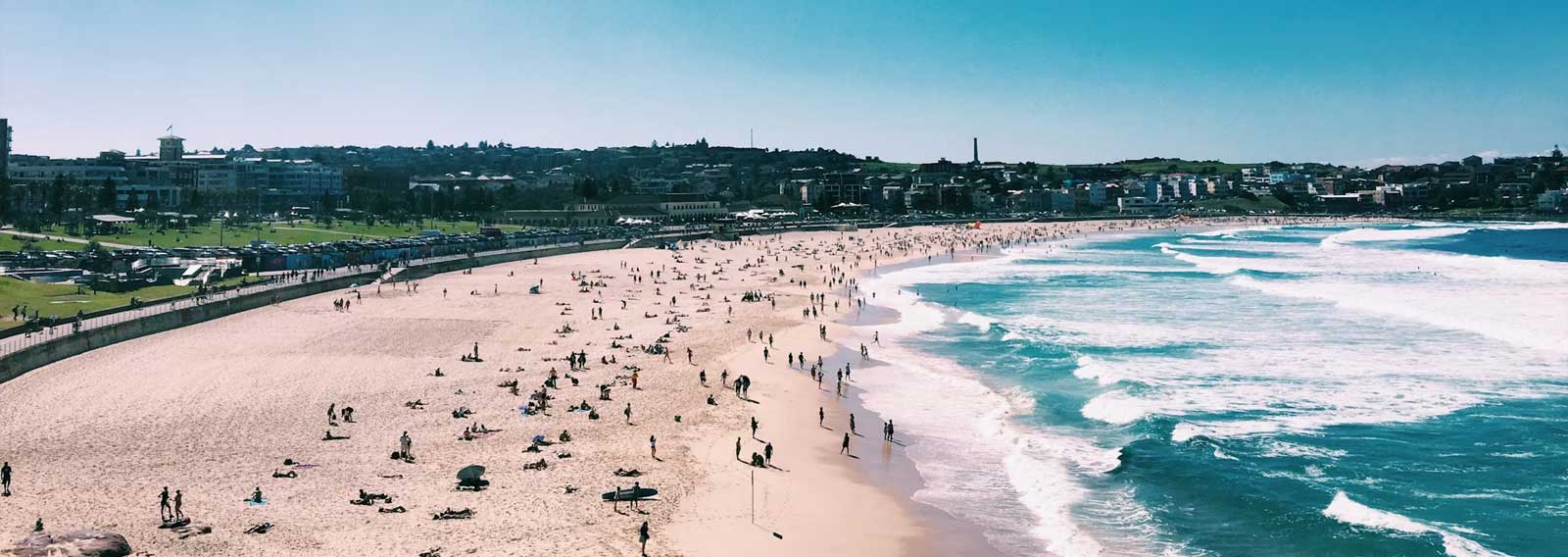
New South Wales police have confirmed that 16 people were killed and 40 more remain in hospital following the mass shooting in Bondi on Sunday night. Authorities report that the attack was deliberately targeted at Bondi’s Jewish community during the first night of Hanukkah. It is the deadliest mass shooting in Australia since the 1996 Port Arthur massacre, when 35 people were killed in Tasmania.
Footage of the attack has left Australians feeling unsettled and unsafe in their own country. Questions loom over public safety: Can we attend Christmas carols? Visit shopping centres? Walk the streets without fear? For many, the comforting sense of security that once defined Australia now feels shattered.
There was a time when Australia was exceptionally safe. Homes were left unlocked. Children roamed the streets at night. Communities looked out for one another. Violence was rare and shocking, not an expected shadow over daily life. But that Australia has changed—and many feel that it has changed without their consent.
What we are witnessing on our streets increasingly resembles conflicts seen in foreign lands rather than local disturbances. Imported cultural and religious tensions, facilitated by immigration and multicultural policy, are playing out in the heart of our cities. These issues feel alien to Australians.
Moreover, political correctness now restricts discussion. Yesterday, if you had said those gunmen were not Australians and didn’t belong in Australia, you would have been howled down as a racist. Must we wait until innocent blood is shed to come to such a conclusion?
Australia faces a profound cultural reckoning. The nation must rediscover its identity and implement policies that protect it. Citizenship and integration should not be automatic or ideologically indiscriminate. Culture shapes character, and religion shapes culture. To pretend that all religions and cultures are compatible with Western society is not harmless tolerance—it is dangerous. Some belief systems are fundamentally at odds with the principles underpinning even liberal democracy, social cohesion, and public safety.
Authorities profess commitment to combating hate, terrorism, and antisemitism. Yet in practice, enforcement often targets speech rather than action—punishing the wrong words online or symbolic gestures in public, while failing to address genuine threats. Weak, indiscriminate policies cannot protect Australians.
Vague laws that claim universality but target no specific threat will not prevent further tragedies. Australia continues to ban “right-wing” commentators, like Candace Owens and Carl Benjamin, while admitting individuals whose ideologies are demonstrably violent or incompatible with Western values. This inconsistency undermines trust in governance and public safety.
As Dr Stephen Chavura observes, “As long as Australia frames the problem solely in terms of anti-Semitism, we’ll get nowhere. This is an Islam problem. It’s a failure of the disaster that is multiculturalism.” A multi-religious society is, in effect, a multi-moral society, where actions deemed virtuous by some are considered murderous atrocities by others.
The Bondi massacre is more than a tragedy for one community—it is a warning for all Australians. Without honest discourse, decisive policy, and recognition that not all cultures can coexist harmoniously, such attacks are likely to recur—just look at Europe today. Australia must confront these uncomfortable truths, or the safety and cohesion of the nation will continue to erode.