

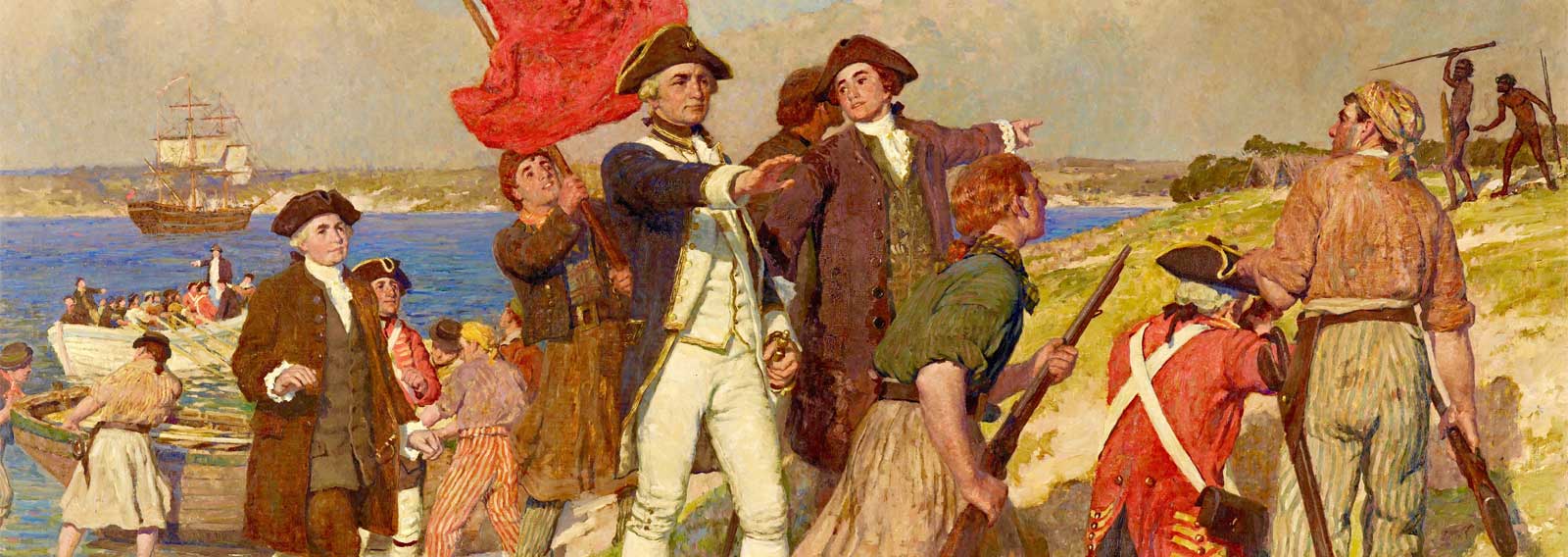
From the moment European settlement began in 1788, Christianity became deeply woven into the social, cultural, and political fabric of Australia. Far from being a marginal influence, it shaped institutions, laws, public life, and national identity for more than two centuries.
Whether through the arrival of the First Fleet’s chaplain, the overwhelming Christian demographics at Federation, or the early establishment of schools, charities, and civic norms, Christianity formed the backdrop against which Australian society developed.
Here are fifteen historical markers that trace how Christian belief and practice informed Australia’s constitutional language, parliamentary traditions, welfare systems, education framework, and cultural landscape, demonstrating the central role Christianity played in shaping the nation.
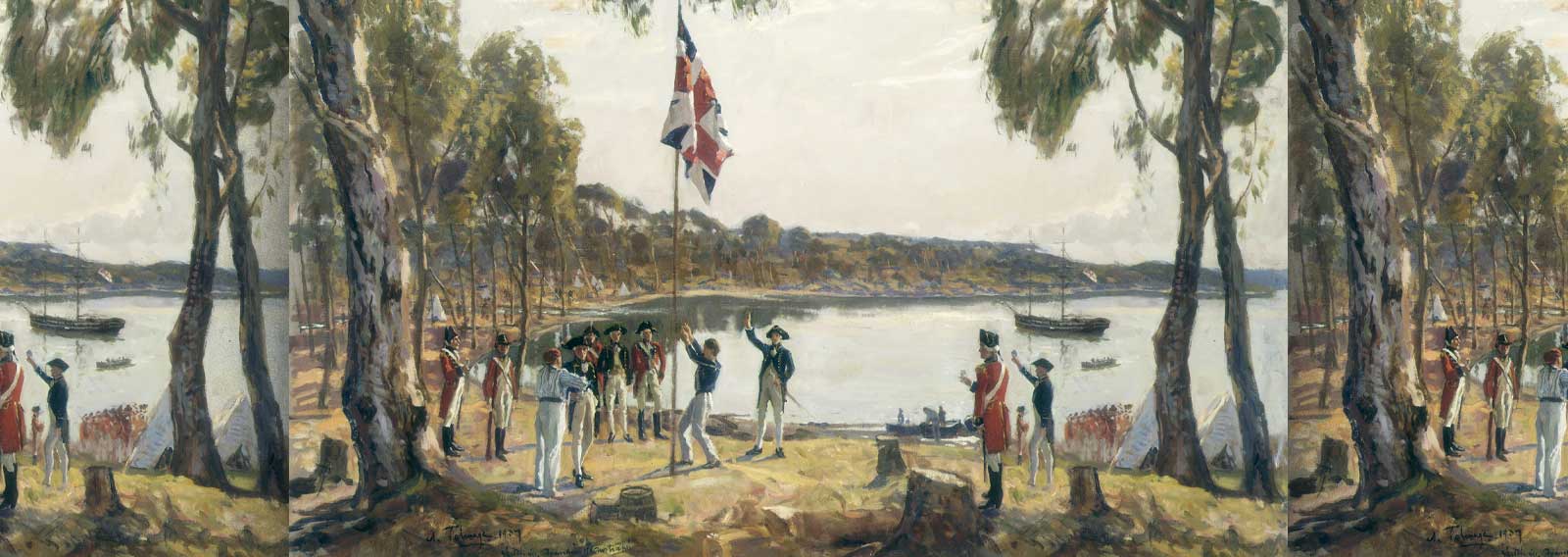
1. Arrival with European Settlement (1788): The First Fleet, which established the British colony in New South Wales, brought Christianity to Australia. Reverend Richard Johnson, a Church of England cleric, held the first Christian service on February 3, 1788, and was tasked with promoting public morality, health, and education in the colony.
2. Dominant Religion at Federation (1901): At the time of Australia’s federation, approximately 96% of the population identified as Christian (40% Anglican, 23% Catholic, and the rest other Protestant denominations), reflecting the overwhelmingly Anglo-Celtic settler society derived from Christian Britain.
3. Acknowledgment of God in the Constitution: The preamble to the Australian Constitution (1901) states that the people “humbly relying on the blessing of Almighty God” agreed to unite, explicitly recognising divine providence in a document influenced by Christian framers and conventions that opened with prayer.
4. Parliamentary Traditions: Both federal and most state parliaments open daily sessions with the Lord’s Prayer (or Christian prayers), a practice dating back to federation and reflecting the nation’s historical Christian underpinnings.
5. Christian Public Holidays: Major national holidays like Christmas (celebrating Jesus’ birth) and Easter (including Good Friday and Easter Monday, commemorating the crucifixion and resurrection) are enshrined in law as public holidays, originating from Christian observance.
6. Role in Education: For much of Australia’s history, Christian churches (especially Anglican, Catholic, and later others) established and ran the majority of schools. Even today, a significant portion of non-government schools (about one-third of students) are Christian-affiliated, with historical state aid to church schools dating from the 19th century.
7. Welfare and Social Services: Christian organisations pioneered hospitals, aged care, orphanages, and charities. Groups like the Salvation Army, St Vincent de Paul, Anglican and Catholic welfare agencies, and missionaries (e.g., John Flynn’s Flying Doctor Service) provided foundational social infrastructure across the country.
8. Legal and Ethical Foundations: Australia’s common law system, inherited from Britain, is deeply rooted in Christian principles, including concepts of human dignity, justice, and morality influenced by biblical teachings, as noted in historical judicial commentary and legal scholarship.
9. Cultural and Architectural Landscape: Churches, cathedrals (e.g., St Mary’s in Sydney, St Paul’s in Melbourne), and Christian monuments dominate historic town centres and skylines, serving as visible testaments to Christianity’s central role in community-building from colonial times onward.
10. Historical Majority and Influence Until Recent Decades: Christianity remained the affiliation of over 88% of Australians as late as the 1960s census, shaping national identity, politics (e.g., sectarian divides between Protestants and Catholics), and public discourse well into the 20th century, with Christian leaders influencing policy on issues like education, welfare, and morality.
11. Christian Moral Framework in Early Colonial Governance: Early governors—Arthur Phillip and his successors—explicitly relied on Christian moral teaching to guide penal reform, social order, and expectations for public behaviour. Sermons, chapel attendance, and moral instruction were considered essential to “civilising” the colony and reforming convicts, reflecting the British belief that Christianity was necessary for a stable society.
12. Missionary Activity and Indigenous Engagement: Christian missionaries were among the first non-military Europeans to establish long-term settlements across the continent. Figures such as Lancelot Threlkeld, Samuel Marsden, and later the Australian Inland Mission saw their work as foundational to the moral and social development of the colony. Their presence created early schools, farms, hospitals, and written records of Indigenous languages—embedding Christian institutions into frontier expansion.
13. Christian Influence on Early Social Norms and Law: Even before Federation, colonial legal codes embedded Christian assumptions on marriage, Sabbath observance, oaths of office, blasphemy, charity obligations, and public morality. Courts routinely referenced biblical ethics, and judges assumed a Christian moral order as the baseline for legislation—an inheritance from English common law.
14. The Central Role of Churches in Community Formation: In almost every emerging settlement—from Hobart to Adelaide to Perth—the first public buildings erected after basic shelters were churches. They served not only as places of worship but also as community centres, town halls, early schools, and venues for public meetings. This pattern reveals how deeply Christian institutions were woven into the formation of civic life.
15. Christian Symbols and Language in Early National Identity: Throughout the 19th century, politicians, newspapers, and public figures routinely described Australia as a Christian society. Public events opened with prayer, Christian hymns featured in national celebrations, and political rhetoric frequently invoked divine providence or biblical themes. Even debates over immigration, morality, and governance assumed a shared Christian cultural framework.
Taken together, these historical realities show that Christianity was not merely present in Australia’s development but foundational to it. From the Constitution’s acknowledgment of God to the dominance of Christian social institutions, public holidays, legal concepts, and community life, Australia grew within a distinctly Christian cultural framework that persisted well into the modern era.
Is it any surprise that Australia adopted overt Christian symbolism for its national flag? As Dr Francis Nigel Lee notes, “It needs to be remembered that the Australian flag unites the three Christian crosses of England, Ireland, and Scotland in the Union Jack – the Christian crosses of St George, St Patrick, and St Andrew – with the Southern Cross. Indeed, it is hard to imagine the flag of any country with a more graphic Christian significance.”
Many Australians today champion the “separation of church and state” and a secular public square—principles rooted not only in the Bible but also in Australia’s founding—yet over the past half-century, these ideas have devolved into a version that would be unrecognisable to previous generations, let alone the nation’s founders, conflating the separation of church and state institutions with a separation of Christianity from politics.
For Sir Robert Gordon Menzies (1894–1978), founder of the Liberal Party and Australia’s longest-serving Prime Minister, and as for Australia’s founders, secularism did not mean a separation of Christianity and politics, but rather ensuring that no particular Christian denomination was favoured by government, while still assuming that the Christian faith and religion would influence the political landscape.
Menzies maintained that, although Christianity should not be expressed in party political terms, it was the duty of all citizens to examine their politics through a Christian lens, noting: “To be a good Liberal, to be a good Labor man, to be a good Country Party man, you will be all the better if you are a Christian.” Christianity is, after all, what Australia is built upon.