

The Western Australian Labor Government, led by Premier Roger Cook, recently introduced landmark legislation to modernise and expand access to surrogacy and assisted reproductive technology (ART).
These reforms mark a significant shift towards claiming inclusivity, equity, and child-centred policy. Inclusivity and equity for whom? For selected adults, yes. But as a child-centred policy? Absolutely not.
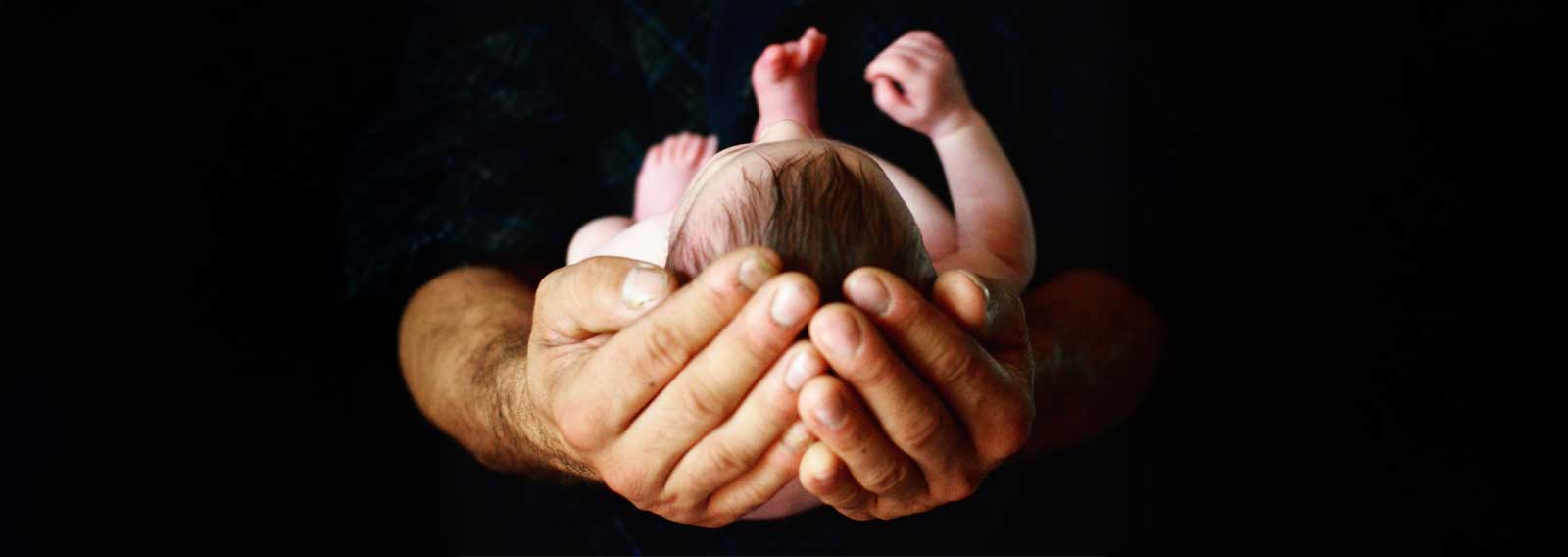
I am an adoptee, and along with my twin, we were both taken immediately from our mother as we exited the birth canal, as happens today in the case of surrogacy.
Our adoptive family couldn’t have been finer. We were placed with a loving father and mother who already had three of their own blood children as part of a wider family overflowing with grandparents, aunts, uncles and cousins. My twin and I received consistent loving attention, affection and affirmation.
On the surface, all seemed healthy and normal. Deep beneath, however, we both lived with silent, wordless struggles, none of which our siblings experienced. These are the same struggles most children experience when taken from their biological roots. This crippling scourge is often referred to as attachment loss.
Attachment loss is the primal, gnawing wound that many struggle to find words to express because it has always been a part of their lives. It has been described as a subconscious trauma experienced due to the severance of the innate bond with the biological mother. This wound is not just emotional. It is physiological, psychological, and spiritual, rooted in an infant’s early attachment and sensory recognition of the mother.
When the primal bond between biological mother and baby is broken, the infant’s ongoing abilities to emotionally regulate, to understand empathy and have strongly developed social skills, to mature in self-concept and resilience are all threatened.
Further effects of this primal wound can include identity confusion, where the child often struggles with a fragmented sense of self. Then there are trust issues manifest by difficulty forming secure attachments with new parents or others. There is also emotional vulnerability, leaving a heightened susceptibility to anxiety, depression, and abandonment fears, painfully existing alongside a persistent longing—a deep, often unspoken desire to reconnect with the birth mother.
Adoption is still rightfully seen as a benevolent response to what is often a difficult and challenging situation. The pregnancy already exists, and yet the mother is unable to care dutifully for the child.
Surrogacy on the other hand, and aspects of assisted reproductive technology, are the deliberate choice to create a new life which involves bringing a child into the world who will ultimately suffer grievously because of adults’ self-centred decisions.
The concept of adults’ rights now surpasses society’s responsibilities to uphold the rights of children. Gay male and trans-female couples, and single men, now demand access to a womb to give them the same rights to offspring as man-woman and lesbian couples, and single women. Their demands now trump the best interests of the child, as have a number of recent childbearing decisions which deny children a natural right to their mother and father.
As British and Maltese child migrants were being ripped away from their biological and cultural roots in the mid-20th century and shipped off to Australia, so too was attachment theory being formed by British psychoanalyst John Bowlby. This theory provided one of the most influential psychological frameworks for understanding how early relationships shape human development, emotional regulation, and interpersonal behaviour.
The psychological and spiritual impact of the trauma experienced by child migrants having been raised away from blood roots, meant that these children often struggled with trust, belonging, and emotional regulation, which disrupted their sense of self-worth and spiritual connection.
It took decades of fighting for a National Apology to Forgotten Australians and Former Child Migrants to be introduced in 2009, which acknowledged the suffering and lifelong impact of removal from parents and culture. Does this contemporary slice of Australian history count for nothing anymore?
We would be foolish to forget the plight of the Stolen Generations and the cultural and familial dislocation experienced by Aboriginal and Torres Strait Islander children who were forcibly removed from their families by government agencies. Severed from their roots and living without a clear sense of belonging or identity, many are in pain, still searching for reconnection and healing.
Time and again, children raised in non-traditional families, and a good number of adoptees raised in traditional families, express grief, confusion, and longing for their missing parent.
In my years of mentoring Australian men through drug and alcohol rehabilitation, I have never come across one man who had a sufficiently strong and consistent attachment with both biological parents up to the age of about eight. All of them have experienced some loss of attachment between birth and mid-childhood. The earlier the loss, the deeper the wound, and the more embedded are the addictions.
When considering donor conception,
65 per cent of donor offspring agree, “My sperm donor is half of who I am.” 45 per cent agree, “The circumstances of my conception bother me.” Almost half report that they think about donor conception at least a few times a week or more often.
thembeforeus.com
Legislative reform in any part of Australia must take into consideration that, as a nation, we are a party to seven core international human rights treaties. The rights of parents and children are contained in article 3 of the Convention of the Rights of the Child (CRC) and Article 24(1) of the International Covenant on Civil and Political Rights (ICCPR).
The Australian Attorney-General clearly states that under the CRC, our nation is,
required to apply the principle of best interests of the child. This principle applies to all actions concerning children and requires active measures to protect their rights and promote their survival, growth, and well-being, as well as measures to support and assist parents and others who have day–to–day responsibility for ensuring recognition of children’s rights. It requires all legislative, administrative and judicial bodies and institutions to systematically consider how children’s rights and interests are or will be affected directly or indirectly by their decisions and actions. (author’s bold highlighting)
The Attorney General’s Department states that,
In addition to the rights enjoyed by all persons under human rights treaties, parents and children enjoy special rights, particular to their status. The rights cover among many points made: the best interests of the child; responsibilities, rights and duties of parents; right of children to be heard.
The Cook Government in Western Australia, however, is pushing for adults’ desires to override children’s welfare. It is seeking to reshape culture and legislation to prioritise adult happiness at the expense of children’s long-term emotional and psychological well-being.
Society has rarely listened to children who experience loss due to adult decisions, but to deliberately ignore these experiences, as the Cook Government is doing, is nothing less than both diabolical and criminal.
We should stop ignoring wisdom gleaned from history and should listen to the traumatic stories of those born through surrogacy and those raised by same-sex parents, even those adopted, and focus strongly on advocating for child-centric policies in education, law, and culture.
Biological parents are statistically the safest caregivers. There is no wonder that every child, created from a male and a female, has the natural desire—and right—to be known and loved by both biological parents wherever possible.
Children raised by non-biological adults such as stepparents and cohabiting partners face higher risks of abuse, neglect, and instability. The Cook Government should therefore be prioritising children’s rights over adult preferences and shaping legislation accordingly. Western Australians should therefore oppose policies that normalise or incentivise family structures that separate children from their biological parents.
Yes, we need a worldwide shift in how we think about family—but surrogacy and assisted reproductive technology are definitely in the wrong direction.
James Parker is a former gay activist and abuse survivor who supports people and their loved ones around sexuality, gender and identity.