

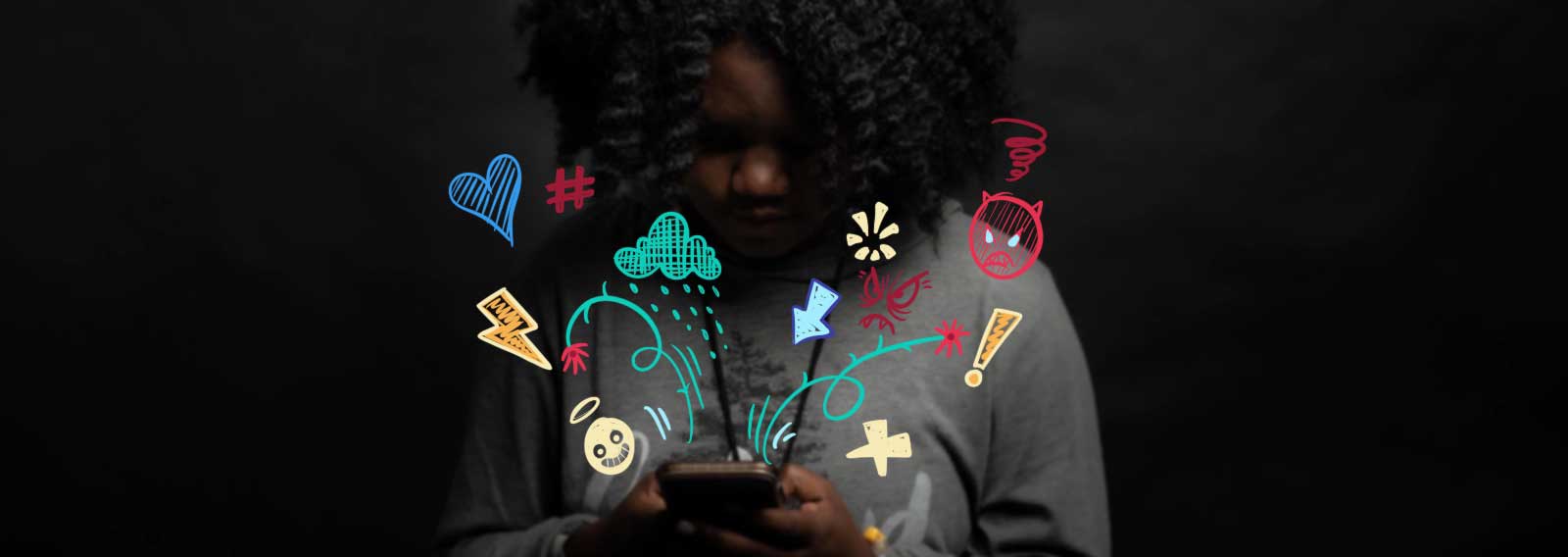
Social media has allowed us to keep in touch with friends and family across the globe, discover new information and meet people with similar interests. But at what price? Let us safeguard our souls while navigating this virtual world.
Social media has unquestionably transformed the way we behave. While some of these changes have been for the better, many have been for the worse. As Tim Challies poignantly writes in The Next Story:
“Today, in our digital world, we spend much of our lives beyond Gibraltar, beyond accountability through visibility, able to say and do and look at and enjoy whatever our hearts desire. Yet for all the freedom it brings us, it can also bring us captivity.”
Tim Challies, The Next Story (Grand Rapids: Zondervan, 2015), p. 68
Recognising that we are in the midst of active spiritual warfare, Christians ought to be particularly aware of the dangers that social media poses to our souls.
Here are three key realities Christians ought to consider when using social media:
1. The Gateway to Pornography
Pornography used to be something you had to intentionally go out to find.
Whether it was enduring the humiliation of purchasing a magazine from the newsagency, or the shame of renting an X-rated movie from the video store, porn was not accessible by today’s standards.
But things have drastically changed. Pornography is now something you must intentionally go out of your way to avoid.
As the Daily Mail recently reported, TikTok’s algorithms actively promote sexual content, drugs, and alcohol to users.
Similarly, a large proportion of videos distributed via Facebook, Snapchat, and Instagram’s newsfeeds contain soft pornography.
Social media has become an acceptable alternative to access pornography.
If this rings true for you, consider Jesus’ words in Mark 9:46:
“If your hand causes you to sin, cut it off.
It is better for you to enter life crippled
than with two hands to go to hell, to the unquenchable fire.”
2. The Illusion of Anonymity
Social media provides an unprecedented opportunity to pretend we are anonymous.
I say ‘pretend’, because as much as we like to think our actions are unseen, all our thoughts and deeds are bare before Him to whom we must give an account. (Hebrews 4:13)
Whether you’re prone to being a keyboard warrior in the comments section, or whether you treat the ‘erase history’ button as if it functionally washes away your transgressions, the facade of anonymity is a legitimate danger when using social media.
Our generation would do well to revive the Puritan practice of living Coram Deo (Latin: before the face of God).
While living Coram Deo is arguably the greatest challenge of the Christian life, it is also the greatest comfort. For in living this way, we acknowledge that God sees all of us, and yet He loves us.
David wrote in Psalm 139:7-8:
“Where shall I go from Your Spirit?
Or where shall I flee from Your presence?
If I ascend to heaven, You are there!
If I make my bed in Sheol, You are there!”
3. The Dehumanising of Others
Not only does social media afford us opportunities to pretend we’re anonymous, but it also allows — and at times encourages us — to forget we’re interacting with other real human beings.
On social media, those we engage with— at least in our minds — are not ‘real’ people. Deep down we know they are, yet in practice, we treat them like digital characters from a video game.
It’s merely usernames and avatars we’re talking to, debating, or maligning. As a result, we’re more likely to say or do things online we wouldn’t dream of in person.
In effect, to speak without having to look another man or woman in the eye is often akin to speaking behind someone’s back. It requires little courage, if any.
Because God designed human beings to primarily communicate face-to-face, social media can lead us to dehumanise others. On social media, we don’t hear the verbal tone of others, we don’t witness their facial expressions, and we aren’t able to use our God-given emotional intuition.
Given this, it’s easy to understand what the Apostle John meant when he wrote:
“Though I have much to write to you, I would rather not use paper and ink. Instead, I hope to come to you and talk face to face, so that our joy may be complete.” (2 John 1:12)
On the contrary, one of the greatest ways to avoid the dehumanising tendency of social media is to embrace the God-given community which is the church.
The Bottom Line
It’s clear that social media is an instrument that can bring about tremendous good or harm, depending on how it is used.
While we cannot go back in time, nor undo technological advancement, we can be trained to be discerning with the platforms we use.
As Challies writes:
“Our task… is not to avoid technology but to carefully evaluate it, redeem it, and ensure that we are using it with the right motives and for the right goals.”
Ibid., p. 32
While we can’t change the past, what we can change is the way we choose to interact with social media for the future.
Like all things, may we — with the Apostle Paul — seek to do all things for the glory of God. (1 Cor. 10:31)