

Most of us have come across the acronym S-O-S. It means ‘save our souls’. It can be used in many different ways, but my first understanding of it came from my father. He taught it to me based on his experience of being a soldier during World War II. He was in a communications division that was tasked with keeping the ‘lines open’ amongst various parts of the defence forces. My favourite part of hearing about this was sitting on his lap ‘squishing’ one of his thumbs, because he only had half of its flesh left, and you could make it roll from side to side like playdough – ah, the minds of young boys with their dads.
But Dad taught me S.O.S. is the most basic of Morse code signals. If that message came in, it was an immediate life-and-death situation. And I have also had the meaning taught to me in sermons when preachers were highlighting that death comes to all of us while asking the questions, ‘What next?’, and ‘Are we ready?’
I was learning this at a time when Australia had a core Christian sentiment, even if sincere and mature faith was not common. People lived as if they agreed to the last six of the 10 Commandments (that highlight how we are to live with each other), even if they did not quite commit to the first four, that outlined our heart states before God. So, speaking of saving our ‘literal souls’ was accepted and mostly tolerated, even if not personally accepted (as long as such discussions were done respectfully).
More recently, I have heard and read about ‘saving the soul of our nation’. It reminds me of what the prophet Jeremiah said on God’s behalf to His people as they went into other lands: “But seek the welfare of the city where I have sent you into exile, and pray to the Lord on its behalf, for in its welfare you will find your welfare.” (Jeremiah 29:7, ESV)
Seeking the ‘welfare’ of the city meant praying for it and living rightly within it so that there was enough peace for them to continue growing as God’s called people. In that way at that time, this was how they were to be a witness to all the other nations (as in Deuteronomy 4). This ‘welfare’ or ‘peace’ was not bringing everyone under the discipline of the Israelite community – but it did mean living differently and encouraging those around them to live closer to ‘how they were made to live’. They were to pray, even for their captors who were technically their enemies, so that they would not decline into abject debased living. This pattern of decline is well described in the Old Testament in the account of Sodom and Gomorrah. Paul also graphically describes this pathway in social life in Romans 1, from verse 18 to the end of the chapter.
Michael Walsh, a literary writer and critic, has reflected on this pattern in the West, as applied to that which touches the state of our hearts – the arts. He noted (in his book The Devil’s Pleasure Palace) that literature in its various forms represents the soul of our societies and nations. For him, our literature is a clear representation of who we are.
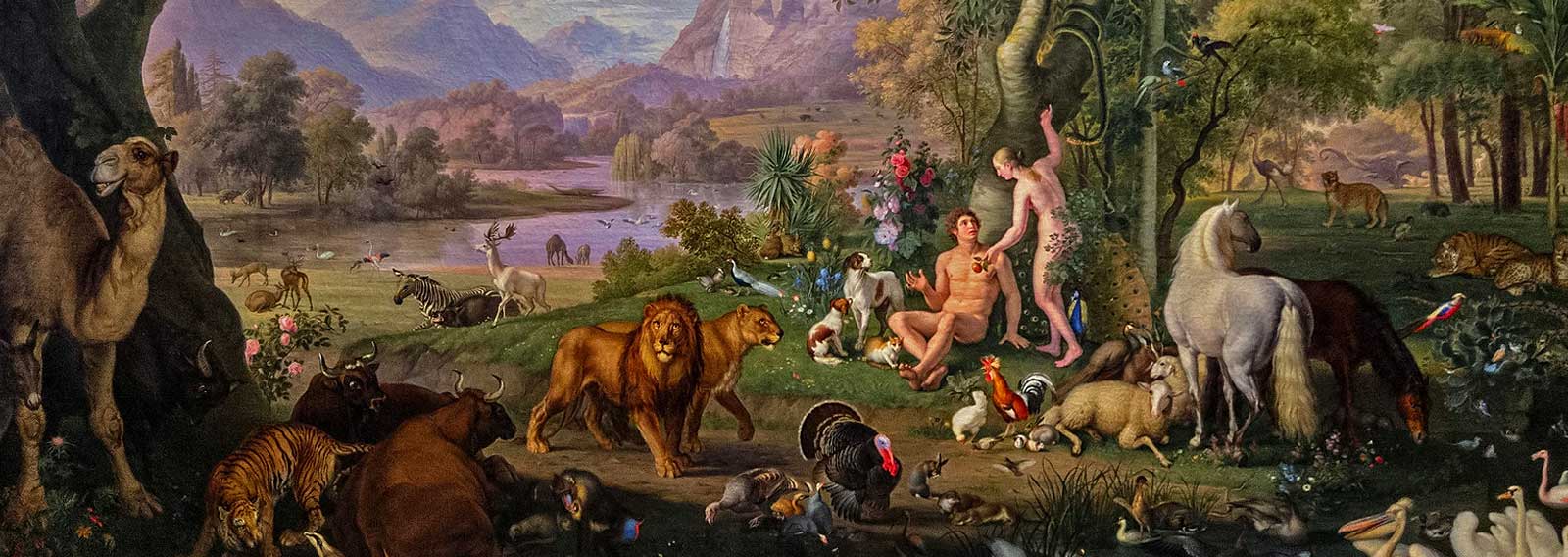
It is why he is so interested in the patterns of thought that have taken hold of our Western worlds in the last fifty years or so. Before that turning point (which he notes, like the philosopher Roger Scruton and others, was the rise of cultural neo-Marxism), we had our grounding in the book of Genesis, “from which our cultural self-understanding flows, as per Milton’s poem Paradise Lost, and Goethe’s Faust” (p.7). It is why Walsh understands that art is a gift from God – and this is reminiscent of what Jesus explained when He explained that ‘out of the overflow of the heart comes that which is good and evil’ (Luke 6:43-45).
Walsh decries the rejection of story as a way of discerning truth. This is similar to J.P. Moreland’s explanation of the dangers of scientism compared to actual science (in Scientism and Secularism: Learning to respond to a dangerous ideology). In that book, Moreland explains how science, masquerading as a neutral secular enterprise, imposes a morality that ignores God. Because scientism claims that truth can only be known by the scientific method, it delegates theology and philosophy, and the arts, to the realm of fiction only fit for personal uses.
But of course, the scientific method has no means of explaining the non-physical aspects of human life – things like love, purpose, voluntary commitment, and addictions. The focus of personal and social morality shifts radically when scientism reigns – or in Moreland’s explanation: “… in the realm of guidance of living one’s life, it goes from truth to the immediate satisfaction of desire. … … in ethics, it goes from positive duty and virtue to do-no-harm minimalism.” (p.35 – emphasis in the original)
This observation, based on our current society’s desire to ignore our personal souls in order to deny our social souls, leads Moreland to ground that is similar to Walsh: “Everything else – especially ethics, theology, and philosophy – is, at least according to scientism, based on private emotions, blind faith, or cultural upbringing….” (p.23) Thus, if scientism is true, society cannot explore its deepest purpose for being, except in disconnected private and personal spaces.
This is the battle that Walsh sees in the world of the arts. He unpacked this further in his subsequent (2018) book, The Fiery Angel. One case study he explores is the role of music in the West – then and now. Walsh reminds us that music heads somewhere. It invites us to discover in our hearts some aspect of reality better, or it seduces us down a rabbit hole of fantasy, called ‘feeling good’.
Walsh draws out the connections thus:
At the heart of all world music… is the heart. The heart, we believe is the repository of humanity’s spiritual goodness, just as the head is its storehouse of knowledge; somewhere between the two comes wisdom. Without wisdom, there can be no rational or humanitarian politics…(p.212)
S.O.S. – for all of us in Australia today. The wrestle for the hearts of people is no longer a struggle in a church community. It is all around us, in every aspect of personal and public life. We can see wisdom being traded for influence. Yet without wisdom comes relational chaos, dysfunctional leadership, and evil dressed up to look good. But what Walsh calls ‘the fundamentals’ still apply. Augustine named it centuries earlier – our souls are restless without ‘thee’, who is our Creator God. In Him is grace and truth. That is the brightest candle in the darkest night. It is why glorious music stirs us and urges us to sing to Him – and perhaps be joining the angels when we do.
So, let’s remember to lift our hearts and sing, and to read poetry, and to read books that give us pause for thought and prayer towards Him. Then in our quiet moments on our own and with others, perhaps we will see our souls refreshed again.