


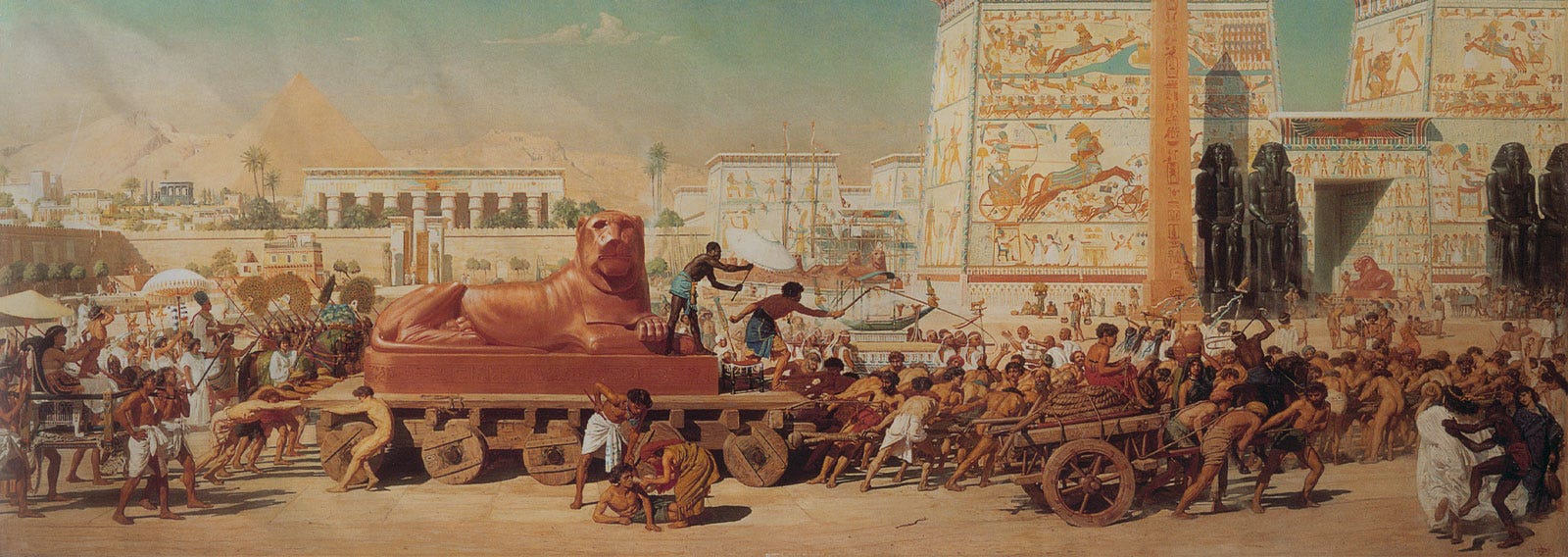
It’s February, and if your New Year’s resolution involves reading through the Bible in a year, you will likely find yourself working your way through the story of Moses and the giving of the Old Testament Law.
Unfortunately, many today don’t know what they’re supposed to do with this section of the Bible, so they may feel the temptation to skip a chapter or two before moving on to the more socially palatable parts.
In the modern world, God’s laws are rarely considered relevant for how we live, vote, or shape communities around us.
Culture and politics no longer look to God’s Word for moral guidance, but instead view biblical morality as restrictive, archaic, and even cruel.
In fact, society has ventured so far from the Christian standard that the public at large would most likely side with the “progressive” values of Sodom and Gomorrah over the God of Genesis 19.
Sadly, this can be true even within the church. For many Christians, God’s moral standards have been replaced with a vague and undefined notion of “love,” which usually just looks like a forever kowtowing commitment to “niceness.”
One of the objections we often hear to Old Testament law is that there are just too many rules. People don’t like reading all the commandments, much less studying them. The rabbinic count has numbered them at 613 laws in total, although that figure has been somewhat disputed.
The sentiment behind the objection is simple: How could God expect all of Israel to observe so many varying commands, especially when the consequences for violating those rules were harsh and unforgiving?
Sure, most of us couldn’t memorise several hundred of anything, but it’s not exactly an honest criticism of God’s Law, given that the same objection is not raised about our current, grossly obese systems.
In comparison, the Wall Street Journal once published an article entitled, Many Failed Efforts to Count Nation’s Federal Criminal Laws. According to the piece, the task of counting the total number of federal criminal laws has frustrated lawyers, academics, and government officials for decades.
Ronald Gainer, a retired Justice Department official, was quoted as saying, “You will have died and resurrected three times” before finding out how many federal criminal laws exist.
At the time, the Justice Department attempted the mammoth undertaking, returning an estimate of about 3,000 criminal offences. A similar study was conducted in 1998 by the American Bar Association, which ran a search through the federal codes, counting the number of times the words like “fine” and “imprisonment” appeared. They concluded the number was much higher than 3,000.
But there was a problem. According to the WSJ, “none of the studies broached the separate—and equally complex—question of crime that stems from federal regulations, such as, for example, rules written by a federal agency to enforce a given act of Congress. These rules can carry the force of federal criminal law.”
Taking this into consideration, estimates of the number of regulations range from 10,000 to a whopping 300,000. As it turns out, 613 laws aren’t as daunting as we so often hear. But is it the harshness of the laws that makes all the difference?
In his book, ‘In His Service: The Christian Call to Charity,’ R.J. Rushdoony notes that many within the church not only listen to gross mischaracterizations of God’s law, but they also accept them as an accurate assessment of the Old Testament commands.
Rushdoony writes:
Too often church men are ready to listen to ugly misrepresentations of God’s law, and to accept them. The law of God is seen as harsh, oppressive, and conducive to tyranny.
The fact is, however, that the total number of laws in Scripture are only a few hundred. And the rest of Scripture is to a degree, a commentary on those laws, and the whole of the Bible makes up one non-too-large volume. The laws of the nations, and even of cities, fill libraries and are increased annually and often daily. Thus God’s laws are few, and they provide for a godly free society. But this is not all. Many of God’s laws are without any provision for penalties by man, the state, or the church. An example of this is tithing. In Malachi 3:8-12, we are told that God imposes penalties for failure to tithe, and blessings for faithfulness, but here as elsewhere, men cannot play God and impose penalties.
The purpose of God’s law is to provide government under God, not under men, not the church, nor the state. God’s law is the means to a free and godly community. In surveying Biblical law, we must first recognize its premise. Fallen man can only create a sinful society and a tyrannical one. The goal of unregenerate man is a new Tower of Babel, Babylon the Great. It means playing God and controlling all things. The goal of regenerate man in Christ is the kingdom of God and the New Jerusalem, a realm wherein righteousness or justice dwells (2 Peter 3:13). Fallen man cannot build a just social order because he is in revolt against the God of all justice or righteousness and His law, which is justice. God’s law is “the perfect law of liberty” (James 1:25), and it is a law hated by all who are in sin, which is slavery (John 8:31-36).
So, the next time you hear somebody complaining about the seemingly endless number of laws in the Old Testament, remind them of the “liberty” enjoyed in the “land of the free,” under laws so numerous that not even those who enforce them can count them all.