

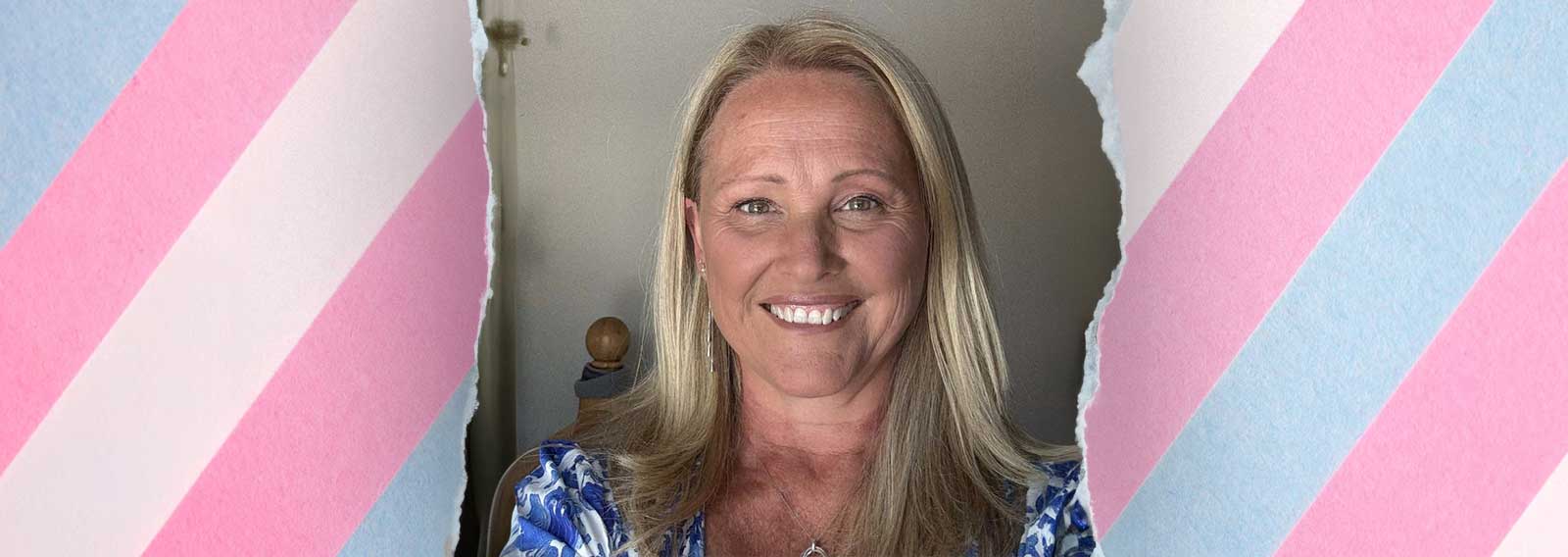
A New South Wales court has ordered women’s rights advocate Kirralie Smith to pay a total of $95,000 in penalties over social media posts deemed to constitute “unlawful vilification” under the Anti-Discrimination Act.
The posts questioned the fairness of transgender participation in women’s sporting competitions, with Smith referring to transgender athletes as “men” and raising concerns about injury risks, one of which the court disputed.
The ruling also requires Smith to publish a corrective statement, remove identifying material from her posts, and comply within 28 days or face the fines being doubled. Smith has announced she will appeal the decision, describing it as an attack on truth and open debate regarding women’s sport.
In a statement posted to X, Smith confirmed the penalty:
“My penalty for being guilty of ‘unlawful vilification’ has been handed down.
In summary, $95,000 in fines, which will double if I don’t pay in 28 days.
The orders also state I need to issue a public apology.
I will be appealing the decision.”
Smith thanked supporters for standing with her and urged Australians to examine the wider implications of the ruling.
She said it was “deeply disappointing” that the word woman has now been redefined to include biological males, and that ordinary speech about matters already in the public domain has been labelled as “violence” and “vilification.”
“Australians should be very concerned about their freedoms,” she wrote.
“Women have effectively been erased from law, and attempts to advocate for public policy are shut down for the sake of the feelings of a few.”
A registered third-party political campaigner, Smith has been vocal in opposing the participation of biological males in female sporting categories. She said her advocacy should be protected political speech, not grounds for punishment.
“Males should never be permitted to participate in female sport. As a woman and a political advocate, I should have the right to campaign on this issue without being penalized,” she said.
Smith warned that the ruling — combined with a recent High Court decision denying her appeal against an apprehended violence order — sets a concerning legal precedent for journalists, politicians, and political activists.
“These decisions are something all public commentators must take note of,” she said.
“The law might claim men can be women, but this defies the laws of nature and cannot be sustained.”
Despite the outcome, Smith said she remained resolute:
“Nothing will steal my joy in knowing that I am a woman and no male ever will be. I am proud to stand for truth and reality.”
The broader issue at stake reaches far beyond Smith’s individual case. The modern gender debate rests on a philosophical and religious inversion: it asserts that individuals define reality for themselves rather than acknowledging that reality exists independently of personal belief.
This premise stands in direct opposition to the Christian worldview, which teaches that God creates and defines reality, and that human beings are called to conform their minds and actions to the truths evident in both divine revelation and the natural order.
Reality does not bend to personal assertion. A man who denies the reality of gravity cannot “identify” himself out of its reach. The law of gravity remains fixed regardless of personal belief. In the same way, biological sex is not subject to self-definition. Like gravity, it is an objective feature of the created order — a truth that exists independently of human preference or proclamation.
The attempt to redefine sex through self-identification is therefore not an expansion of liberty but a denial of reality itself. True freedom is not found in reshaping truth to suit personal identity, but in submitting to the truth as it exists — and as God has established it.
Smith’s case underscores a collision between two worldviews: one that demands language conform to subjective identity claims, and another that insists speech and law remain anchored to objective reality. The outcome of that conflict will shape not only the future of political advocacy but also the boundaries of free expression in Australia for years to come.