


Mass migration has become a defining issue in many Western nations, fueling political and social tensions as countries grapple with the economic and cultural challenges of large-scale immigration—an influx that citizens never requested or voted on. With rising numbers, local populations are feeling the strain on public services, housing, and social cohesion, leading to growing dissatisfaction with immigration policies and concerns about their long-term impact.
The United Kingdom has experienced a record number of migrant crossings in recent months, with 705 people arriving in a single day across the English Channel in April. Despite new laws aimed at raising salary thresholds for work visas and tightening border controls, the country’s public services, including the NHS and housing, are struggling to keep up. Many communities are increasingly concerned about the impact of migration on crime rates, social cohesion, and local economies. Critics argue that the government’s efforts are reactive rather than proactive, and that long-term solutions are desperately needed.
Ireland, once celebrated for its open-door migration policy, is now grappling with significant challenges. A surge in asylum applications, combined with a housing crisis and rising homelessness, has led to widespread public protests. Many Irish citizens argue that the country’s resources are being stretched to the breaking point, leaving them unable to secure affordable housing or access public services. Critics of current immigration policies claim that the government’s prioritisation of global humanitarian needs is coming at the expense of Irish citizens’ well-being.
Germany has long been a major destination for migrants, particularly those fleeing conflict in Afghanistan and Syria. However, the country is facing mounting criticism over its ability to integrate newcomers. Rural areas, in particular, are struggling with overcrowded schools, rising crime rates, and social tensions. While German officials continue to push for integration policies, many citizens feel that the government is not doing enough to address the negative impacts of high migration levels. Public dissatisfaction is growing as locals voice concerns over the preservation of German culture and identity.
Also regarded as a model of progressive migration policy, Sweden is now reassessing its approach. Following years of high migration, the Swedish government introduced new reforms in April 2025 that tighten residency requirements and focus on more targeted integration measures. Sweden acknowledges that the large influx of migrants has placed significant strain on public services, housing, and social cohesion. Rising crime rates and the failure to successfully integrate many immigrants into the workforce and society have led to increasing frustration among the Swedish population.
France is dealing with an escalating migration crisis, particularly with a sharp rise in irregular migration from the UK. Negotiations are underway to establish an asylum swap agreement with the UK, where migrants arriving in the UK irregularly would be returned to France, while those with valid asylum claims would be processed in the UK. The French public is increasingly concerned about the economic and social consequences of this migration wave, with worries over job competition, strained infrastructure, and the erosion of French culture. Many French citizens argue that the country’s ability to offer support to migrants is being overwhelmed.
Despite its strict immigration laws, Italy has struggled to manage irregular migration and deportations. Limited deportation capacity means that thousands of migrants remain in legal limbo, even after receiving deportation orders. This has led to a growing sense of frustration among Italians, particularly in southern regions where migrants are concentrated. Critics argue that Italy’s inability to enforce its own immigration policies undermines the rule of law and places undue pressure on local communities.
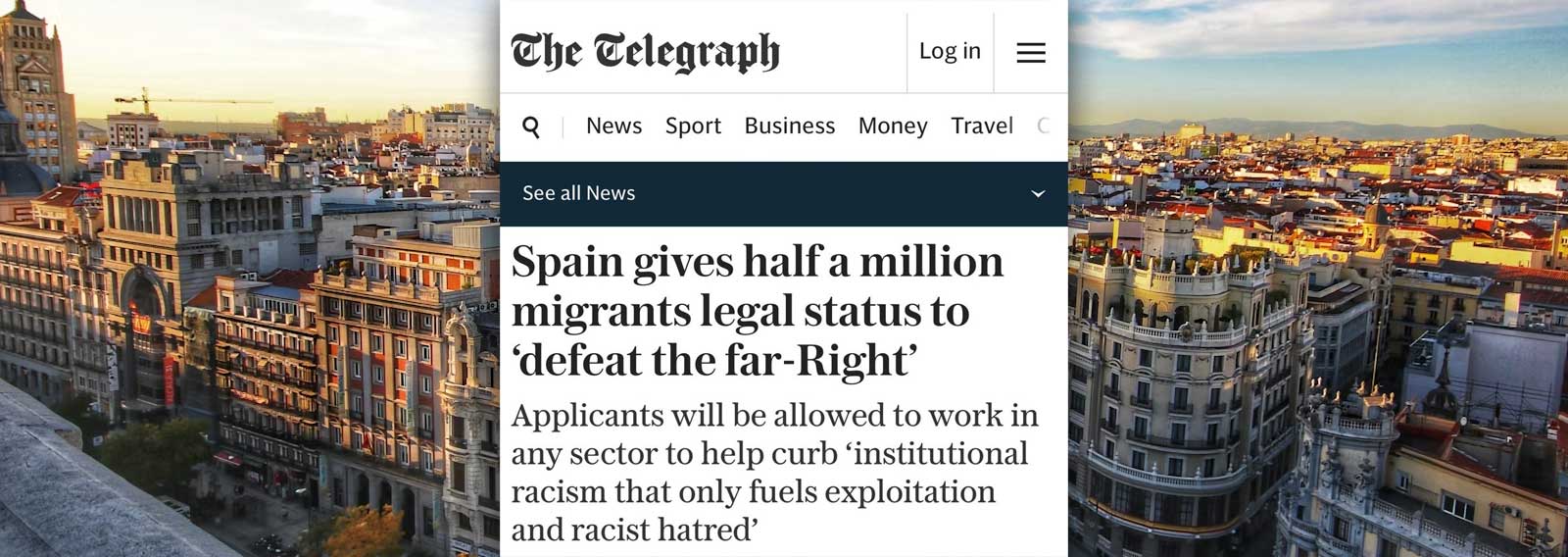
Spain is facing similar challenges, with its economy increasingly reliant on migrant labour. While the country is introducing reforms to regularise the status of migrants and facilitate labour market integration, the rapid pace of migration is exacerbating housing shortages and wage stagnation. Over the past decade, house prices have reportedly soared by 44%, while wages have only increased by 19%, making it harder for young Spaniards to find affordable housing and well-paying jobs. Many Spaniards feel that the benefits of migration are not reaching them, while the challenges are continually mounting.
The Netherlands is grappling with the fiscal impact of migration. A recent study by the Institute of Labor Economics highlighted how migrants contribute to or burden the Dutch economy, depending on their background and reason for migration. As the country debates the introduction of population caps and further restrictions on immigration, public concerns about the sustainability of migration policies are growing. As in many other Western nations, there is a growing belief that migration is being pursued at the expense of social cohesion and economic stability.
Australia has maintained tight border controls but still faces challenges from high migration and visa overstayers. The strain on urban infrastructure, particularly in major cities like Sydney and Melbourne, has led to concerns about overcrowding and a lack of affordable housing. While the Australian government has implemented a seemingly more controlled approach to migration, there are growing concerns about the pace of cultural change and the integration of migrants into Australian society. Today, 30% of Australian citizens were born overseas.
Canada is also feeling the pressure of high migration rates. While the country continues to embrace immigration as a key driver of economic growth, public concern is rising over the strain on housing, healthcare, and social services. In cities like Toronto and Vancouver, housing prices have skyrocketed, and many Canadian citizens are finding it increasingly difficult to access affordable homes. Critics argue that Canada’s immigration system is not equipped to handle the volume of new arrivals, and that the benefits of migration are not being evenly distributed across the population.
Across the Western world, there is a growing sense that mass migration is placing unsustainable pressures on social systems and national identities, while introducing very few, if any, benefits. As such, the backlash against mass migration is intensifying with native populations increasingly opposed to the changing face of their nation, ethnically, culturally, and religiously. Mass migration, and its by-product “multiculturalism”, was not something Westerners voted for, and yet we have seen this thrust upon Western nations the world over. It was a social experiment carried out at a global level, with little to no regard for the consequences should the experiment fail.
But what, exactly, was the goal? Mass migration is often presented as a humanitarian effort, framed as a way for Western nations to combat poverty by redistributing the prosperity their ancestors built over centuries through Christian principles to the descendants of those who have repeatedly rejected the Gospel in favour of false religions. Enter Roy Beck, founder of Numbers USA, and his famous gumball analogy. To gather an idea of just how absurdly impossible it is to combat global poverty through immigration into Western nations, Beck offers a vivid illustration worth sharing again:
In the end, mass migration can never be a practical or lasting solution to the suffering of the world’s most vulnerable populations, so we shouldn’t imagine that it is the motivation driving it. The reality is, as Beck highlights, 99.9% of people in dire situations will never have the opportunity to immigrate to wealthier countries. Their only hope lies in being supported and empowered where they are.
The only way to create meaningful change for the vast majority of these people is by focusing on improving conditions in their home countries. As Jesus taught, we are called to go to the nations, not simply bring 0.1% of them to us and consider our work done. Our mission is to reach out and make a difference where the people are, not just to offer some of them a limited solution to the detriment of the neighbours that we are called to love first.