

Two events of late have confirmed that we, as a country here in Australia, are struggling to take care of people well because we have lost confidence in who we are as people.
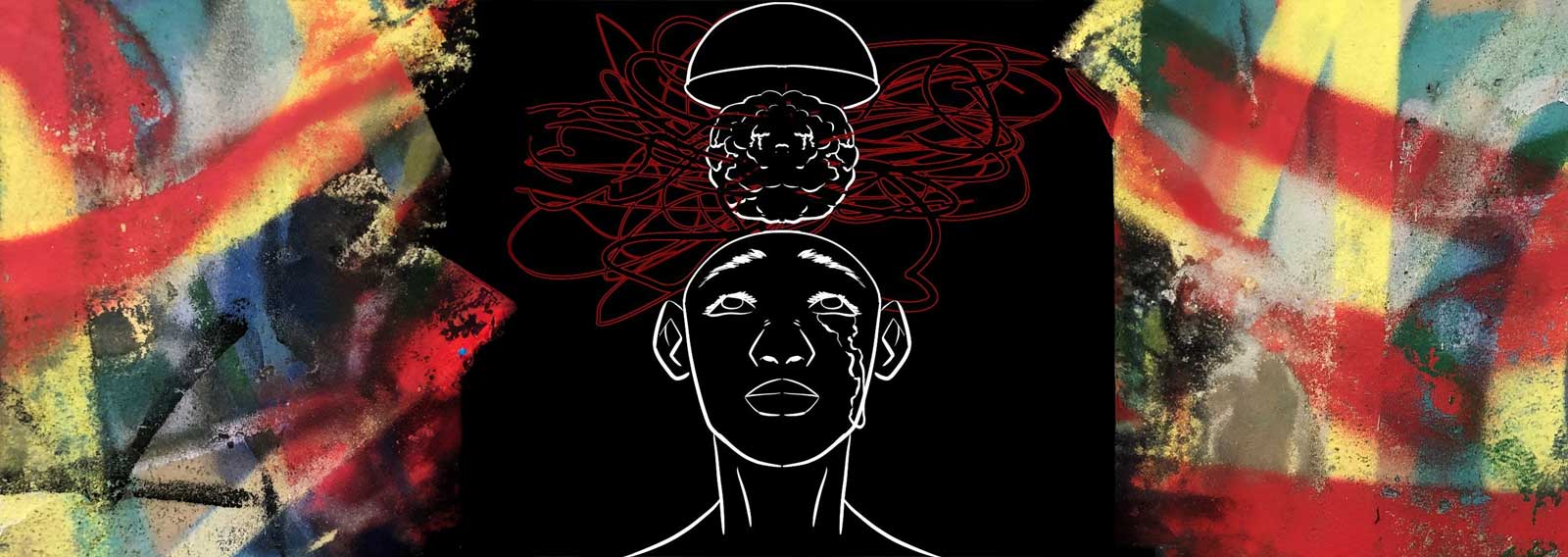
One event involved a mental health professional suggesting that incarcerating young people would not be good for them, even if they had committed violent crimes. Apparently, her reasoning revolved around the brains of the young person not being developed enough to understand the context in which they find themselves.
The second was a local council in Tasmania taking exception to the use of the metaphor ‘mind virus’ by one of their own. Their reasoning referred to the claim that some fellow councillors might have considered that this criticism might mean that they were “suffering from some sort of mental illness or condition.”
Both events demonstrate that we do not understand who we are as people. As the start of the Bible reminds us, we are made in the image of God, are souls in a body, and therefore have the capacity to exercise free will – to do good or not.
This means that our thinking is more than our biology and social context. But much of our therapeutic language of the day is bereft of recognising that we are more than our brains and context. Our thinking beyond instinct is always ethical because we get to decide what to do with our genetics and previous learnings.
But, if you believe that our thinking is simply reliant on our brains, then you cannot quite comprehend that a metaphor about thinking does not infer anything about the brain and illness. Nor can such a simplistic understanding comprehend that experiencing uncomfortable consequences for our poor choices can be part of training into virtue.
Thomas Szasz explained that even the term ‘mental illness’ is itself a metaphor, some fifty years ago: “Mental illness is a metaphor. Minds can be “sick” only in the sense that jokes are “sick” or economies are “sick” … Mental illness is not something a person has, but is something he does or is.” (p. 267)
When we confuse the physical with the non-physical aspects of reality, we diminish the capacity for moral responsibility. Many have warned about this since Szasz, but he also warned of it in 1974:
Medicalizing interpersonal conflicts – that is, disagreements among family members, the members of society, and between citizens and the state – threatens to destroy respect not only for persons as responsible agents, but also for the state as an arbiter and dispenser of justice. [283]
It appears that the local council did not want to take responsibility and engage in the issue under discussion – it was easier to ignore the metaphor by conflating brain and mind, disease and moral conflict. Likewise, the mental health official did not want to engage in considering the self-responsibility of young people, but seemed to prefer pretending that their actions are predetermined by their physical and social inheritances.
The alternative – our exercise of free-will decision-making – does not sit well with many of these current therapeutic elites. They therefore dismiss the role of implementing consequences that involve physical restraint because they believe these youngsters are simply acting according to their ‘Nature and Nurture.’ That is, these purveyors of ‘they can’t help it’ thinking believe that the youngsters’ inherited physical capacities, in combination with their social upbringing and current context, fully define who they are. So how could they possibly be responsible for committing crimes, even if those crimes are repeated? Putting them ‘inside’, as this line of thinking goes, would only add another negative social context to their learning patterns.
Dr Ron King, a past president of the Australian Psychology Society, also warned of this problem in the 1980s. He was essentially ignored. Although, based on his thinking (and some others at the time), I did read another important volume in the history of this blight – Paul Kline’s 1988 Psychology Exposed: Or the Emperor’s New Clothes. Here was one of Kline’s insights, which took me on a line of investigation that has lasted decades:
I have shown how the scientific method is not, as defined by one the world’s leading practitioners, apparently well suited to the subject matter of psychology which is conceptually different from that of the natural sciences. Of course man [generic] can be described in terms of biochemistry, or anatomy, but this is clearly not psychology. … [this scientific method emphasis] encourages work that is essentially trivial but correct and technically faultless. (p. 28)
So yes, when a therapeutic researcher or practitioner says, “So and so’s brain has not finished development”, there will be a technical kernel of truth in that. But in the total picture of life and growing up, it is trivial. It is inconsequential. Theodore Dalrymple (a pseudonym for Dr Daniels) monitored the impact of this mistake in the British psychiatric system from within their prison and court systems. He has documented many cases (in his The Knife Goes In and Elaborate Evasions) where criminals were treated differently because they pleaded along the lines of “my harsh childhood and current situation” made me do it – for example, a woman who took months to systematically poison her child to death was found guilty of manslaughter rather than murder.
Dalrymple uses these examples to explain why recent decades of psychological thought have been “overwhelmingly negative”. He believes the collective mindset of contemporary therapeutic thinking presumes a confidence that is not real with reference to who we are as human beings. The consequence is that too many modern therapists make themselves increasingly inconsequential to the realities facing humanity, because their thinking “encourages the evasion of responsibility”. Because they do not acknowledge human self-consciousness that enables moral choices, Dalrymple believes that contemporary therapy “makes shallow the human character because it discourages genuine self-examination and self-knowledge. It is ultimately sentimental and promotes the grossest self-pity, for it makes everyone (apart from scapegoats) victims of their own behaviour…”
Even more recently, Abigail Shrier (in Bad Therapy) elucidates one of the outcomes of parents evading training their children in personal morality over the last decade: “instead of using moral language to describe misbehaviour, educated parents had begun employing therapeutic language. … Agency slunk out the back door.” (p. 18)
This is why I groan when I hear these therapeutic part-truths being promoted as bases for decision-making. The sadness, and perhaps perversion of it all, is that in trying to sound important, the opinions being promoted are ultimately based on self-defeating assumptions. As Kline said all those decades ago:
Until the voice is heard throughout the land proclaiming that the glorious colours of experimental psychology are but the emperor’s new clothes, there will be no progress and psychology will remain a quasi-scientific form of hermeneutics of interest only to its practitioners.
We are embodied souls. All we do beyond instinct exercises our self-consciousness. We get to decide what to do morally with our physical and social contexts. Whenever such realities of human existence are ignored, we become guided (and then pressured) by pseudo-soul work hidden within the cloak of pseudo-medicine. Szasz described this in his strong conclusion all those years ago:
The old quacks peddled fake cures to treat real diseases. The new quacks peddle fake diseases to justify chemical pacification and medical coercion… Pharmacracy is the alliance of medicine with the state. (p. 300)