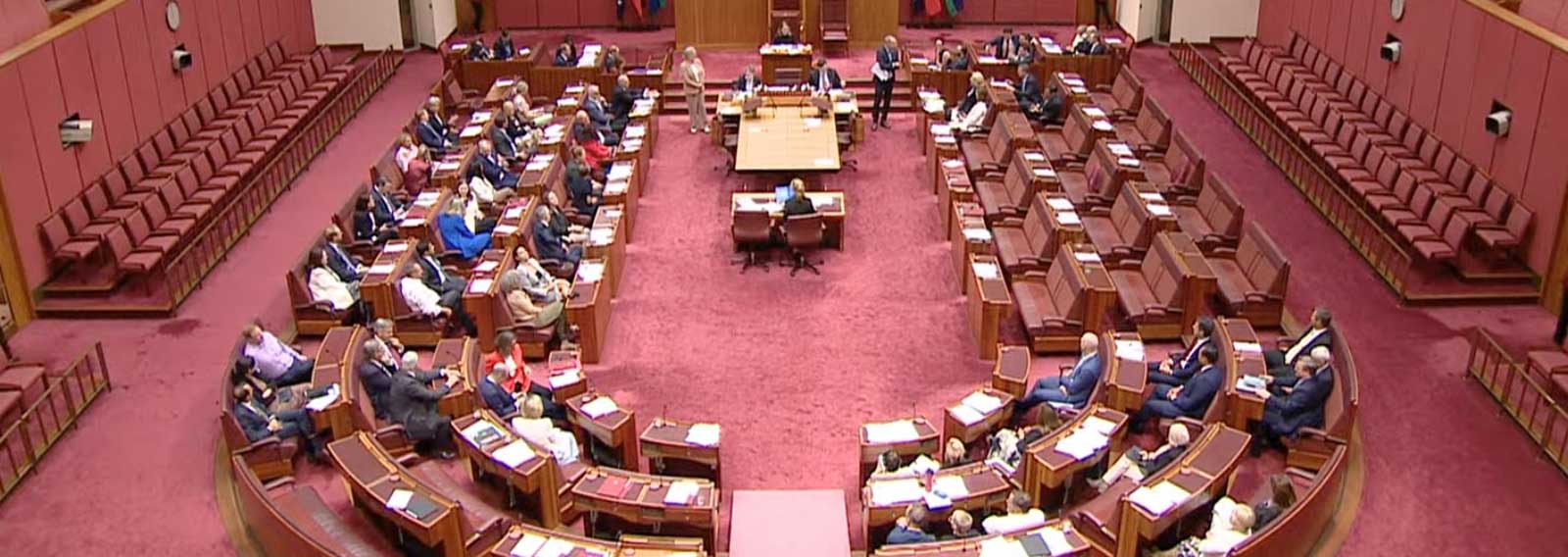



The State believes that insisting social media platforms should verify age is the equivalent of introducing compulsory seat belts for children. It is also reported that many young women no longer want to even have children, because of how they (the women and their partners) want to live their lives.
What does this lead to? You know – the State wanting more control over children, and people giving up on having children? My mind goes to an excellent book I read years ago. There is a moment in that story where a person is being shown around the public facilities that helped maintain order and sustainability in that so-called peaceful city. The man was called John Savage, and he was astonished as he saw the ‘factory’ that produced babies in a way that suited the various manpower needs of the community.
He was equally astonished by people who moderated their urges into controlled desires by taking their social drug of choice – the perfectly harmless, so it was said, soma.
Surely we are not far from that prescient description penned by Aldous Huxley some nine decades ago? Why? For a start, it seems about two-thirds of the Australian voting population prefer socialist thinking in our leaders (the one-third Labor voters and the one-third Teal + Green mishmash). In their actions, they therefore reject classic Western Judeo-Christian ethics and governance. We can see that rejection in the developments within our political-legal-educational practices.
Westminster law is dying. Education is about doctrinaire teaching into a privileged view of the world (summarised as the cultural neo-Marxism of grievance and oppression), while neglecting instruction in the manners and grammar of civil discourse. Charity has become reduced to an entitlement mentality that demands ongoing victimhood and, thus, perpetual welfare support. Development of virtuous character has transmogrified into a never-ending search for well-being and self-worth through the ongoing invention of disordered thinking about identity.
So why not make babies away from wombs, and raise children directly related to the manpower needs of the government’s agenda? And who dares stop anyone from taking whatever recreational drug of choice they choose to help tame and redirect their body’s natural urges and desires towards fantasies bounded by ‘what I think I am’? Isn’t that the basis for individual happiness and self-fulfilment? Isn’t that how we discover the freedom we crave to ‘simply be me’ and to ‘do it my way’?
JS Mill would roll in his grave. His appeals for liberty assumed civil society, not crass individualistic sensuality.
Mill’s assumption is not that of many of our modern prophets who keep pruning the limbs off trees while sitting on the offending branch. Jonathan Haidt, despite recognising that ‘religion’ is important in understanding what helps young people, suffers from this malady. He sees it, but doesn’t know what to do with the consistent yen for the transcendent. Thus, in his first ‘big book’, The Happiness Hypothesis, he describes how he is focused on meaning within life, not the purpose of life. His ‘happiness formula’ demonstrates this thinking: “H = S + C + V” (THH, p. 91), where S represents the biological set point, C represents conditions of your life, and V represents voluntary activities. And the next statement by Haidt illustrates his kind of ‘soft determinism’: “The challenge for positive psychology is to use the scientific method to find out exactly what kinds of C and V can push H up to the top of your potential range.” (THH, p. 91 – emphasis added).
And this takes us back to Brave New Families, for as in Brave New World, it is the scientific method that is deemed to help us sort out the dilemmas of human life! This is and cannot be so. To quote Ritchie from his Science Fictions (a book about the current common mistakes in research):
Psychologists have the unenviable job of trying to understand highly variable and highly complicated human beings… difficult, if not impossible, to pin down in a lab experiment…. Could the sheer complexity of the task make findings in psychology particularly untrustworthy, compare to other sciences? … There is something to this argument: … (p. 32)
Something to this argument indeed. This simplistic notion of simply bringing in a law to change society is impossible because of its incoherency. Even at a practical level it fails – those families who already manage social media well do not need a law to change anything. For those who teens and children are at risk, they do not ‘care’ about it anyway, and will be free to find their ways around the ban. Or, as with alcohol use, these young people will sometimes enlist willing adults to help.
Haidt, in The Anxious Generation, sensibly gives hints to parents, schools and communities about how to relate to their young – for example, no social media-capable phones until the child has the moral responsibility to obey ‘guardrails’, like no use in the bedroom (he recommends about 16 years of age).
But what does the government emphasise? A ban, and they claim ‘this will save lives!’ I don’t know about that, and it will be impossible to prove one way of the other. What they have done is ignore the elements that support parents being parents and communities being communities.
That is what parenting is about. But our deterministically minded, anthropologically socialist government cares little about looking at what supports families in their search for the purpose of life together. Why doesn’t the government put as much – indeed more – effort into what Haidt reported in The Righteous Mind:
Putnam and Campbell put their findings bluntly: By many different measures religiously observant Americans are better neighbours and better citizens than secular Americans – they are more generous with their time and money, especially in helping the needy, and they are more active in community life. (p. 310)
This is repeated in his book, currently feeding the ‘ban social media’ frenzy, in a chapter called “Spiritual elevation and degradation” (Ch. 8). Haidt observes:
DeSteno found that there is abundant evidence that keeping up certain spiritual practices improves wellbeing. … reducing self-focus and selfishness, which prepares a person to merge with or be open to something beyond the self. (p. 202) … There is a hole, an emptiness in us all, that we strive to fill. If it doesn’t get filled with something noble and elevated, modern society will quickly pump it full of garbage.” (p.216)
Haidt’s colleague Rausch summarised the dilemma that they at least own:
This research has led me to questions that I regularly grapple with and do not know the answer to: What are the ingredients needed to create long-lasting and stable real-world communities? To what extent is religion necessary? And what might we—adults—need to sacrifice to provide community for our children? (in After Babel, their SubStack account)
Are those ingredients included in the recent banning action? I can’t see it. All I see is the dystopian Brave New future that are projections of our simplistic, mechanistic leaders, which makes sense, given their godfather is Karl Marx, a determinist who has bred many of his kind after his image.
I know I am an idealist to think that our Brave New World government would consider such nuance of human life, and consider how they might support all of it. But is the best family support we can give simply passing a law banning social media access – that conveniently also gives greater potential access to personal information to the State? No. Here is an alternative example of taking spirituality more seriously as part of social research, by Horwitz (2022). She decided to investigate the possible impact of the sincere spiritual commitment of young people and their families on educational outcomes.
One of her summaries concluded the following for students who abide in a faith in which they believe as part of a community to which they belong:
On all indicators, abiders across social class groups fared better than nonabiders. … abiders are significantly less likely to experience emotional, cognitive, or physical despair. They feel less anxious, healthier, and more optimistic about life. Without a doubt, their deep relationship with God helps them overcome several challenges they bump up against. Abiders are simply more resilient. This is driven by their involvement in a religious social community but also their steadfast belief in God. (pp.179-80)
Horwitz accepts their “deep relationship with God” as a real outworking of “their steadfast belief in God” (p. 180). It seems that Haidt (and some of his colleagues) cannot yet take that metaphysical step.
And our government? Of course not, when led by someone who will not even take his oath of office on the text from which his authority derives. Of course not, when philosophical determinism is the privileged worldview of the party leaders. Of course not, when citizens are happy to let the parliament take responsibility for their decisions. Of course not, when even having children is only presented as a chore, a cost and an inhibitor of personal freedom.
I will try not to react when I hear trumpeted ‘This will save lives!” That is what was said about better health education and diet – and how is that going?
Praying might be a better response, while helping the young families that have been placed in our lives. And part of my prayer is for a government that will encourage the bearing and rearing of children as a blessing, not a burden to be delayed, minimised or avoided altogether. That is simply dehumanising. We are called to become more human, not less. Christians are called to model that way of life. Let’s ask for more grace, peace, strength and discernment to take up that challenge.