

The line between inciting hate or violence and informing others about that hate and violence is being blurred.
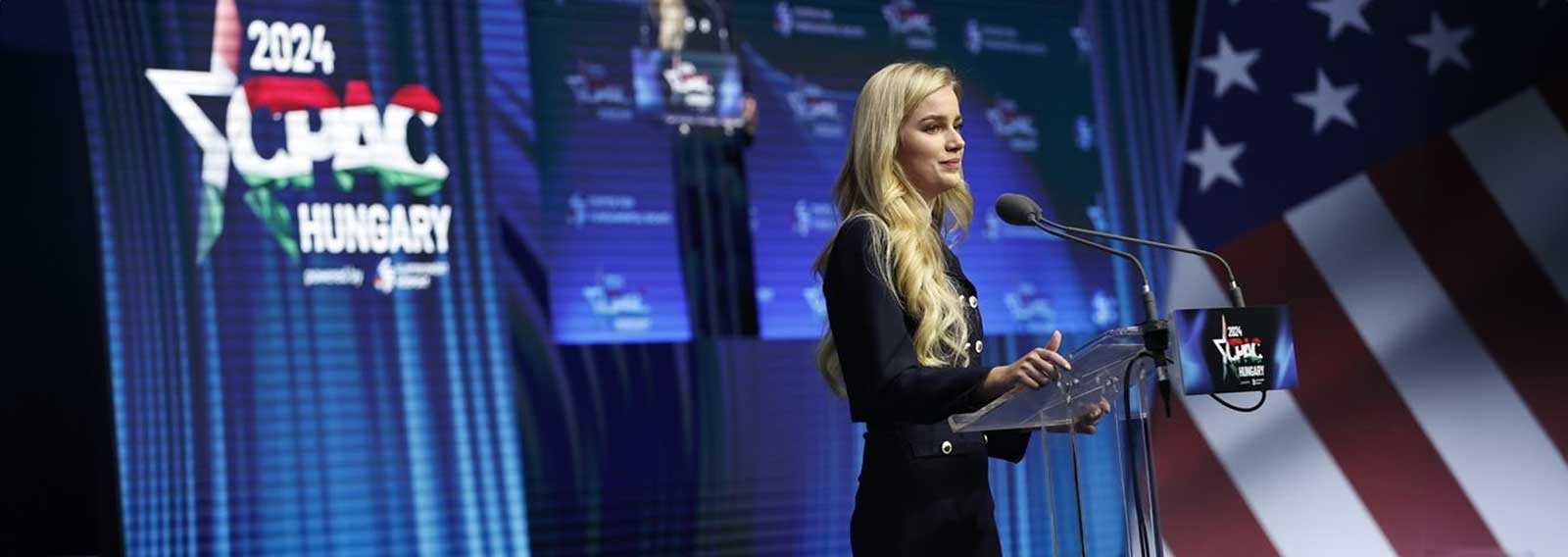
Facebook’s recent heavy-handed actions against Caldron Pool, and Caldron Pool contributor, Evelyn Rae, suggest that the social media platform is happy to unfairly conflate reporting or fair criticism of an event with endorsement of that event.
There is a difference between advocacy and commentary.
If we apply descriptive and prescriptive linguistics to how newsworthy events or commentary are presented, we can see that companies like Facebook will inevitably hurt their customer base, because they continue to blur the descriptive and the prescriptive, rather than hold them in tension.
Descriptive is freelance, risky. Prescriptive tells everyone exactly what to do and when. The failure to determine who is saying what, and why, will mean that the prescriptive parameters of speech shut down all descriptive aspects of speech and vice versa. In short, this failure kills freedom of speech and with it constitutional democracy.
Rather than being a paradox of contrasting terms, the descriptive and prescriptive can be viewed as dialectical. There is a relationship between the two. Think of it as a dynamic, dialectic linguistic muscle which moves the limbs of thought and communication forward. This relational dialectic is exemplified by feedback.
Feedback consists of both positive and negative communication. Each serves a unique purpose in evaluating information and data. Without the positive and the negative, feedback is pointless. Likewise, without the descriptive process, there is no freedom to communicate. Without the prescriptive process, we have no idea how to communicate.
Without the working connectivity of this relational dialectic, conflicting viewpoints have no platform. Feedback has no real role to play other than what it is allowed to be channelled into cheap echo chambers. As a result, freedom of speech either ends up adrift in a sea of discordant noise, or it becomes stuck in the paralysing quagmire of political correctness and identity politics.
We end up with what Chantal Mouffe, in The Democratic Paradox (2005), called a ‘third way’, a ‘one-dimensional world’ where the ‘blurring of the frontiers between Left and Right, jeopardise the future of democracy’. This is because of an aversion to freedom of thought and freedom of speech. An aversion played out through a fear of losing, a fear of conflict, fear of people being able to discriminate and choose between two competing ideas. This would include a fear of free speech because of insecurity, and the overbearing, unachievable quest for absolute equality.
Political opponents are no longer friendly adversaries but are pitted against each other as bitter enemies.
Constitutional Democracy ends up like a ship that’s lost its ability to move – fodder for jagged rocks; the play toy of manipulative propagandists, the progenitors of totalitarianism, and their progeny: lies, confusion and powerlessness.
There is no push and pull; no dialectic muscle to empower Mouffe’s idea of classical liberal democracy, where friendly adversaries negotiate, disagree, are diplomatic, and apply temporary compromise under the banner of unity in diversity.
According to Mouffe, the future of ‘modern democracy lies in the recognition and legitimation of conflict, along with the refusal to suppress it by imposing an authoritarian order. Its strength lies in its ability to replace antagonism (intense dislike and deep-seated hostility) with agonism (positive struggle; constructive conflict).’
For Mouffe, ‘conflict need not involve the identification of an enemy whom one wants to destroy; a conflict between adversaries who may disagree can exist, but ultimately they respect one another’s right to exist.’ Bitter political enemies are ‘no longer perceived as an enemy to be destroyed, but as an ‘adversary’, that is somebody whose ideas we combat but whose right to defend those ideas we do not put into question.’ [i]
The dialectic muscle that is push and pull, allows us to hear different perspectives, formulate an opinion for ourselves, and freely communicate that opinion in a way that others can understand it. This dialectic muscle is a vital muscle for the body politic. Communication as descriptive and prescriptive dialectic, are good for constitutional democracy. They are the ingredients necessary for freedom of speech to function properly.
Social media platforms must embrace this relational dialectic by seeing that there’s a difference between describing and prescribing; the difference between commenting on events or ideas, and using those events or ideas to ‘incite violence or risk imminent harm.’
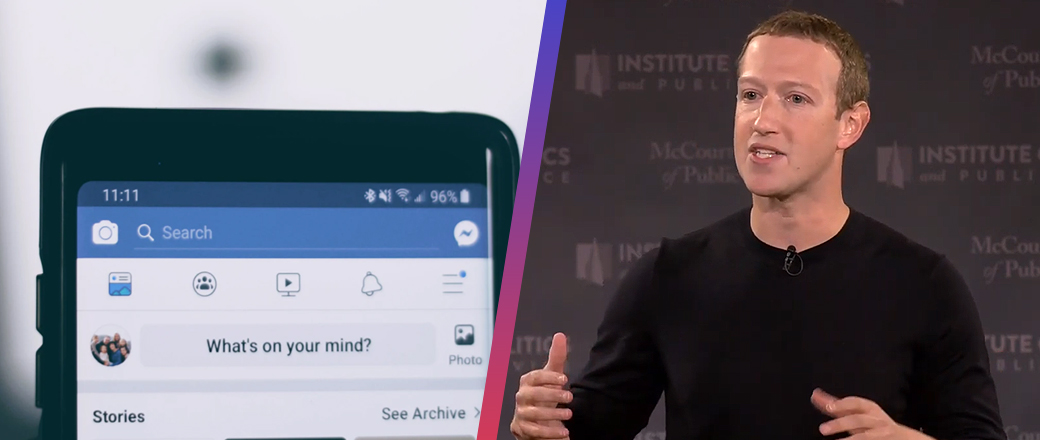
Facebook CEO, Mark Zuckerberg broke with the norm this week. Standing up and speaking out in favour of freedom of speech, the CEO outlined how one of his biggest challenges at Facebook was finding an answer to policing freedom of expression while ensuring such an action doesn’t hurt freedom of expression.
Describing how difficult this is, he said “some people think our policies don’t prohibit content they think qualifies as hate, while others think what we take down should be a protected form of expression. This area is one of the hardest to get right.”
He expressed concern about ‘polarization’, saying that Facebook ‘has an important role in designing their systems to show a diversity of ideas and not encourage polarizing content.’
Zuckerberg believes that Facebook has two responsibilities in this regard: First, ‘to remove content when it could cause real danger as effectively as we can, and second, to fight to uphold as wide a definition of freedom of expression as possible — and not allow the definition of what is considered dangerous to expand beyond what is absolutely necessary.’
He said that he believed “people should be able to use our services to discuss issues they feel strongly about — from religion and immigration to foreign policy and crime. You should even be able to be critical of groups without dehumanizing them.” He also admitted that Facebook makes “enforcement mistakes” because judging who is saying what and why “isn’t always straightforward.”
Pointing to precedents in the United States, the Facebook CEO said, he wants to uphold broad speech rights, stating: “I know many people disagree, but, in general, I don’t think it’s right for a private company to censor politicians or the news in a democracy.”
Zuckerberg rightly stated that “while he worries about an erosion of truth, and that he doesn’t think most people want to live in a world where you can only post things that tech companies judge to be 100% true.”
His quest is to leave a legacy that protects freedom of speech. In doing so he said part of the process is keeping Facebook free of fake accounts, malicious entities exploiting the platform with dubious money-making scams, and removing deliberate misinformation that could lead to someone taking hazardous advice.
Part of his concern is the increasing restrictions on free speech in other countries. For example, China’s exporting of their vision of the internet, which suppresses dissent, monitors users speech and determines what kind of speech is allowed.
For me, outside his reliance on the term hate speech and polarization, Zuckerberg’s speech hit the right notes. He says a lot of the right things when it comes to putting in place protections for freedom of speech on the platform, but as with a lot of promising talk, actions speak louder than words.
I was both impressed and surprised by his stance on China, and encouraged by how he acknowledged the importance of preserving freedom of speech and its important role in a vibrant constitutional democracy.
Mennonite theologian, John Howard Yoder wrote, ‘democracy, with its judicial and constitutional processes, can be essentially defined as communication.’ [ii]
The danger to constitutional democracy is the undermining of this ability to communicate freely. Free speech is let down through a failure to recognise the distinction between advocacy and commentary; the failure to acknowledge the relational push and pull dialectic of prescriptive and descriptive.
Failure to acknowledge the relational dialectic undermines free speech by emphasising prescriptive speech over the descriptive, or vice versa. This happens through the quest to control others by imposing new cultural laws on the body politic, such as anything not viewed as politically correct, being far too easily hated on, as hate speech.
We already see this when political groups, a lot like China’s vision for the internet, prescribe politically correct speech as the only legitimate speech. Nowhere is this more powerfully seen than in forced speech laws regarding Islam, transgenderism, or the LGBT religion in general.
The relational dialectic of push and pull has the power to preserve constitutional democracy, through agreement and disagreement. Just as tension in a muscle is necessary to ensure motion, so is the necessity to have a platform or open forum, where ideas can be aired, challenged and either adopted or reasonably rejected. All of which is built on mutual respect, not necessarily on an obligation to mutual agreement.
Zuckerberg’s concern about polarization places him in agreement with Mouffe’s argument. The preservation of constitutional democracy lies with an effort to utilise constitutional democracy’s capacity to replace antagonism (intense dislike and deep-seated hostility) with agonism (positive struggle; constructive conflict).
Freedom of speech is the great relational dialectic muscle of constitutional democracy. Its push and pull gives constitutional democracy momentum. Only through its preservation, and the exercise of it, will we be able to move forward, while also preserving healthy tradition, freedom, rights and responsibilities.
References:
[i] Mouffe, C. 2005. The Democratic Paradox, Verso
[ii] Yoder, J.H. 1964, The Christian Witness to the State, Herald Press.
Full transcript of Mark Zuckerberg’s Speech