
“All sides are anti-science.”
I’m watching psychologist professors Jonathon Haidt and Jordan Peterson on YouTube discussing polarisation and the left-ward bias of our Universities. Haidt says that an anti-science trend emerged among conservatives in relatively recent times.
“To be anti-evolutionary… is actually what’s happening on the left now, too,” Peterson adds. His prediction is that having taken the humanities, those leftist ‘neo-Marxists’ will be targeting the biology school next. He quotes Brett Weinstein, “evolutionary biology has something in it to offend everyone.”
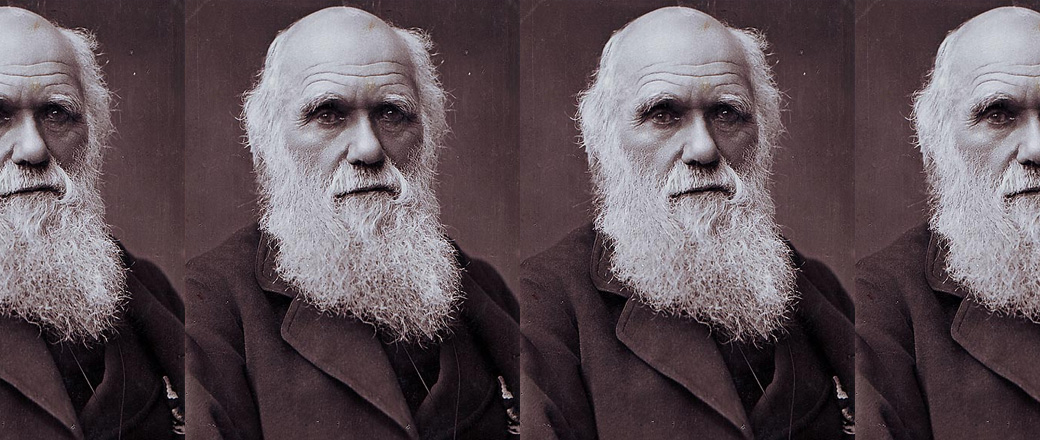
It was a unique experience for me as I read A. N. Wilson’s (2017) biography of Charles Darwin, to contemplate that Peterson might see his prediction realised on the pages of this book.
This is the first sentence of Wilson’s book, an opinion that the author himself was surprised to form:
Darwin was wrong.
Having also written that “it is hard to think of any other branch of modern science… whose proponents spend as much time talking about the errors of theology as of the truth of their own area of expertise”, I’m sure Wilson was not surprised to receive intense criticism from most reviewers. Biologist Jerry Coyne, one of those “proponents” who most clearly fits Wilson’s categorisation (he wrote Faith vs. Fact, Why science and religion are incompatible) delivered a scathing review for the Washington Post. The online atheist commentariat matched that with typically agonistic reviews, such as the DarwinKilledGod blog’s post entitled A Creationist Asshole Wrote a Dishonest Book about Charles Darwin. It received a fairly jovial review from the Spectator, though.
Charles Darwin: Victorian Mythmaker is actually a good read. It’s not the easiest read. It flows frequently from topic to topic with many unusual side-alleys and interesting, but seemingly irrelevant, facts. There’s a lot of name-dropping, which would have been ok if the names were not all people who’ve been dead for over a century. And there’s the odd sentence that isn’t in English because apparently British authors of a certain generation expect everyone to carry Latin-English dictionaries. The overall effect, however, is to create a sweeping “feel” of the Victorian life and culture and scientific establishment.
Wilson doesn’t really attack evolutionary biology the way a neo-Marxist would, however. He takes no issues with so-called “biological essentialism” (the obvious idea that our biology plays a role in determining our identity like, for instance, our gender), but he does have several things to say about capitalism. He also has something to say about Darwin’s blatant racism and sense of class-superiority, and the links between his theory and the eugenics movement that inspired, among others, Hitler. (Though some try to defend Darwin from this with fervour, it should be understood that Darwin isn’t blamed for what Hitler did, but the historical link between the ideas is undeniable.)
In fact, Wilson actually draws some comparison between Darwin and Marx. They both provided sweeping generalisations that became pervasive worldviews, their names have both gained “‑isms”, they both accumulated cult-like following and shaped history. It is equally fair to suggest they were mere spearheads of ideas that were already “in the air”.
Wilson’s conclusion against Darwin’s theory, however, is not drawn from its links to eugenics and Hitler, nor his comparisons to Marx, nor from his own contemplation of the problem, nor from only reading 150-year-old books. Rather it was from recent controversies, in which he found that even after one hundred and fifty years, there is nothing approaching consensus for how natural selection can account for the biological evidence around us and the fossil evidence beneath us.
It’s worth noting, too, that his is a nuanced opinion. He doesn’t deny the observed fact that plants and animals can change and adapt (such as dog-breeds, for instance, which vary enormously between Chihuahuas and Great Danes). What he does do is draw the very important distinction between micro-evolution and macro-evolution. It is one thing to say that living organisms can exhibit various forms that provide different fitness relative to external demands (such as, clearly, the difference between polar bears and grizzly bears, which suit their respective environs). It is another to say that the emergence of the forms that are selected can be accounted for by gradual and unlimited variation, or that the dominant mechanism is a relentless, competitive struggle to survive.
The scientific community has been spending the last century accumulating knowledge of, but not necessarily accumulating evidence for, evolution. Whenever new discoveries are made in biology or palaeontology, the scientist incorporates the new knowledge into the existing accepted framework, contributing to an ever more detailed evolutionary narrative. That evolutionary narrative is constantly in flux. For example, as recently as 2017 the evolutionary tree for dinosaurs was completely re-written, throwing out the structure of the hip-bone as the primary categorisation, and hence discarding a 130-year-old model. It is not uncommon for published dates to be revised multiple times, as the evidence refuses to conform to the branching tree-of-life diagram conceived by Darwin.
This continual revision can look like the scientific method in action—hypothesise, test, falsify, re-hypothesise, voila. However, when is the framework itself questioned? Observations are repeatedly integrated into it, but when was the framework itself proven? It is here that Wilson, having dared to question it, also dared to think that far from being proven, it has been successfully disproven.
The first death-knell to Darwin’s idea was theory of inheritance—genetics. This required the neo-Darwinian synthesis (the version of evolution you were probably taught at school), which accommodated the discovery of DNA and proposed unguided mutations as the source of novelty. Few are aware that genetics has since been systematically killing off the neo-Darwinian synthesis also. While researching his Charles Darwin biography, A. N. Wilson read Michael Denton’s 1985 book Evolution: A theory in crisis. He had likely already finished the biography when, in 2016, Denton published a sequel, Evolution: Still a theory in crisis. Denton also proposes that Darwin was wrong, and that there is no evidence for gradualism in the fossil record or the biosphere.
Denton proposes that the answer will be a kind of self-structuring principle at play – a “law of form” by which biology tends to arrange itself in complete functional organisms. It’s a clever idea, but has a great many logical hurdles to overcome if it is to explain macro-evolution and abiogenesis; it could even be called ‘clutching at straws’ for materialism.
Another scientist who has rejected Darwinism, Cornell professor of genetics and inventor of the Genome Gun, John Sanford, points out in his book Genetic Entropy that the genome is gradually being eroded under a relentless weight of accumulating mutations. How self-structuring can proceed despite the erosion of its building blocks is difficult to imagine. Sanford is now a creationist, to the confusion of some less broad-minded people on Quora.
Wilson, Sanford, Denton and others, have all realised that you need only throw out the bathwater, not the baby. In this case, the “baby” is the immense amount of experimental data that has been gained through repeatable, reliable operational science—telling us in biology how animals and humans function and, in palaeontology, where fossils are found and what they are. The “bath-water” is the historical science, the back-story constructed for how this all came to be. The first requires observation; the latter is untestable interpretation, highly vulnerable to materialist bias.
As an analogy, Edison found 10,000 ways to not make a light-bulb before succeeding in making one—but his light-bulbs could be tested immediately. Macro-evolution can’t be. Perhaps with Darwinism gone, and Neo-Darwinism dead-but-not-yet-buried, there are only 9,998 theories to go before historical science may actually hit the jackpot. Perhaps we’ll now put some 80 years of thought into the self-structuring idea before rejecting it also.
Meanwhile, in the interview with Jordan Peterson, Jonathon Haidt says, “Someone applies to a geology programme. They’re a fundamentalist, young-earth creationist. Are you going to admit them? No! I don’t think you should. They’re not able to do the right kind of thinking, based on what we know to be the case.” A moment later confirming what he means, “They’re not in a scientific paradigm.”
That’s an interesting view for the founder of the Heterodox (meaning ‘diverse viewpoint’) Academy. While Professor Sanford retires from a distinguished career in academia having become a creationist, at the front end of a career they apparently shouldn’t be let in the door. In fairness to Haidt, his point hinges on the definition of fundamentalism, which he may be defining as irrational. However, when his characterisation of young-earth creationists being anti-science is explained by assertion of “what we know to be the case”, that phrase is anti-science. Science is never hurt by being questioned by an enquiring mind; there are (or aught to be) no sacred cows.
Personally, I was impressed by Wilson’s bravery, rigour and honesty. He researched Darwin’s life with great depth. He drew many conclusions about Darwin’s character and intentions, but was able to back them up with the extensive referencing because Darwin wrote so much—he had Darwin’s notebooks, Darwin’s letters, the notes that Darwin made in the margin of other people’s articles, and discussions about Darwin by his contemporaries. He doesn’t attack Darwin, but he does present him warts and all. If you read it, you will undoubtedly learn a lot. Like me, you may also unlearn the one thing you thought you did know—that Darwin was inspired by Galapagos finches. He wasn’t. Wilson doesn’t chart a speculative or pre-suppositional journey, but rather a detailed one with an open mind.
So A. N. Wilson’s book was an educational read. What was the broadest lesson in it? Scientists are only human; those closest to science know it best. Their fallibility is boundless. I would think that in the age of fake news, in the era of global warming, and when supposed “experts” support gender fluidity with a straight face… surely the rest of us are also getting some practice at being sceptical of the scientific establishment, with its own brand of elitism?
The intransigence and vitriol of Coyne and Dawkins (and others) demonstrate that the naturalist/materialist position is just as susceptible to “fundamentalist” thinking as its alternatives. The untouchable elevation of established frameworks has become a clear and demonstrable problem with modern science, and it is unlikely that macroevolution is the only false framework, retiring reluctantly.
Orthodoxy is anathema to real science. Maybe if more, bold and intellectually honest researchers like Wilson are willing to critically examine the historical sciences, we will one day break the stranglehold of the “scientific consensus” and stop paying mere lip service to heterodoxy.