

Rejecting God, Deifying the State
When Kings Govern Without Divine Authority

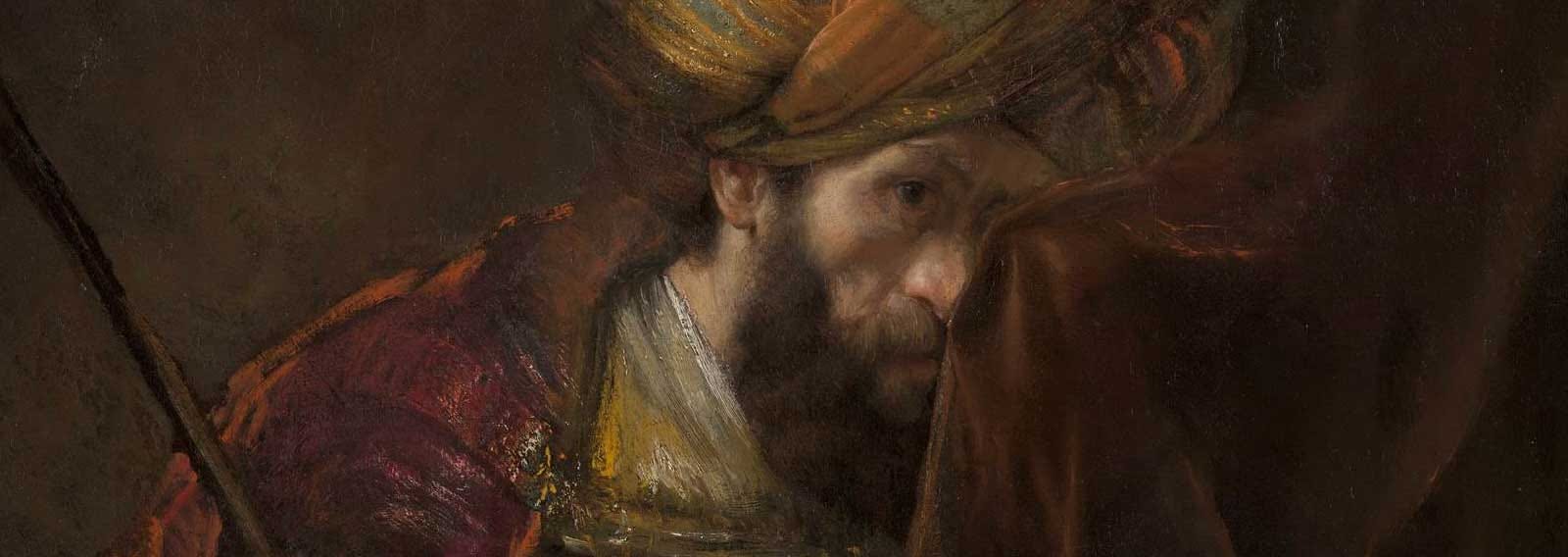
The biblical story of King Saul is not just ancient history. It foreshadows many of the perils we face today when civil power is elevated above divine authority. Just as Israel once replaced God’s kingship with a human throne, so too has the modern West replaced God’s moral law with the dictates of the state.
In 1 Samuel 8, the Israelites asked for a king “like the nations,” and in response, God granted their request by appointing Saul as their monarch. This request marked a pivotal point in Israel’s history. They not only rejected God’s Law, but they also sought to conform themselves to the standard of the nations around them.
The Israelites’ desire for a king wasn’t inherently sinful; the idea of kingship itself wasn’t prohibited by the Law. However, their request was a profound rejection of the divine calling Israel had received: to be a nation set apart, meant to lead the nations rather than follow their ways. According to Deuteronomy 17:14-15, while kingship was permitted, the king was to be chosen by God—a king whose reign would align with God’s Word, not the patterns of the surrounding nations.
But what exactly made the idea of a “king like the nations” so problematic for Israel? To understand the issue, we must look at the tragic story of Saul’s appointment and downfall, which illustrates the dangers of a king who rules as the nations do. Saul, the king chosen by the people, embodied the very qualities the Israelites desired—he was a king like the nations. But his reign would ultimately reveal the perils of abandoning God’s plan for governance.
Kingship in Israel was not meant to mirror the oppressive monarchies of the surrounding nations. While a king was not forbidden, he was meant to govern in a way that reflected Israel’s unique relationship with God. The most significant distinction between an Israelite king and the kings of the nations was the king’s responsibility to recognise God as the true sovereign, rather than seeing himself as the ultimate authority over his people.
In ancient times, kings often viewed themselves as divine or as the human embodiment of the nation’s god. This created a dangerous conflation of civil authority with religious authority. The king was seen as a god on earth, and his decrees were viewed as the commands of the deity himself. This is precisely the kind of system that was strictly forbidden under the Law of Moses. Israel’s king was not to operate as the ultimate spiritual leader of the nation; that role was reserved for God, and taught through the priesthood.
The king’s position was meant to be that of a vassal ruler, subordinate to the true sovereign, God. His power was delegated, not self-derived, and his authority over the people and religion was strictly constrained by God’s laws.
Saul’s reign exemplifies what happens when a ruler adopts the model of a king “like the nations.” In 1 Samuel 13, Saul disobeyed the command of the prophet Samuel to wait for him to offer a sacrifice before going into battle. Fearing his troops would desert him, Saul took matters into his own hands, assuming the role of priest and offering the sacrifice himself. This act of disobedience was a clear violation of God’s command, and when Samuel arrived and confronted Saul, he rebuked him, declaring that his kingdom would not endure. God had sought a man after His own heart—David—to replace him (1 Sam. 13:13-14).
Again, in 1 Samuel 15, Saul defied God’s command to completely destroy the Amalekites, sparing King Agag and the best livestock. When confronted by Samuel, Saul tried to justify his actions by claiming that he kept the best livestock for God. Samuel responded with the rebuke: “To obey is better than sacrifice” (1 Sam. 15:22). Saul’s repeated defiance sealed his fate—God had rejected him as king, and David was chosen as the new ruler (1 Sam. 15:23).
Saul’s failures highlight the dangers of a king who sees himself as above God’s Law, acting according to his own will rather than submitting to divine authority. In his pursuit of power and self-justification, Saul blurred the critical separation between civil and religious authority.
From this example, it becomes clear that the ideal Christian civil authority is not a ruler who operates as a law unto himself, but one who governs under the authority of God’s Word. The biblical model of kingship emphasises humility, subordination to divine law, and a recognition that true authority comes from God alone. A king who seeks to honour God, rather than his own desires or even the desires of his people, is a king after God’s own heart.
The ideal monarch reigns in light of God’s laws, not in opposition to them or competition with them. The purpose of his rule is not to elevate his own status or to serve the interests of the powerful, but to uphold God’s truth and justice, ensuring peace and prosperity for the people.
Historically, Western nations recognised the importance of this distinction between church and state. Christian monarchs in Europe, while far from perfect, were expected to rule in alignment with God’s law, maintaining a separation between the civil and the religious. The king was not the priest, and the priest was not the king. This balance of power ensured that the state could not operate with unchecked authority and that moral guidance ultimately came from the Bible, not from the state itself.
However, in the modern era, a shift has occurred. The fear of a “Christian theocracy” led to an overcorrection, with the state absorbing the functions of the church. The language of tolerance and pluralism, which was once meant to protect religious freedoms, began to be used to sideline Christianity itself. Secularists, claiming to defend democracy and fairness, actually sought to replace God’s moral authority with their own.
In the process, the state did not remain neutral—it became its own moral arbiter, dictating what was right and wrong based on political expediency rather than divine revelation. The removal of the church as the moral guide did not result in a religiously neutral society; instead, the state began to impose its own ideologies, often punishing those who criticised or opposed them. In this new system, blasphemy laws continue to exist, not to protect the sacred, but to guard the state’s dogmas. Those who challenge the state’s progressive orthodoxy risk being branded as heretics, losing their jobs, or even facing legal consequences.
The end result of this shift is a bloated, overreaching state that now seeks to dominate every aspect of citizens’ lives. From regulating family dynamics and personal freedoms to dictating morality, the state has become an all-encompassing authority. This centralised power, which once had its limits, now attempts to control the individual, forcing people to fund its projects, support its ideologies, and accept its moral standards.
In contrast, Christendom once thrived because it recognised the importance of distributed power—across church government, state government, family government, and personal responsibility. Each institution had its role, and no single entity was allowed to absorb all power. When these areas of authority become conflated within the state, the results are disastrous. The state becomes an oppressive force that seeks to control every aspect of life.
If the Western world is to survive and thrive, it must rediscover the blueprints found in Scripture. The Bible is not just a spiritual guide for individual salvation; it is an incredibly practical book that offers wisdom for governing all areas of life—whether for kings, lords, peasants, or paupers. Only by returning to these biblical principles can we hope to create a society where power is properly limited, where authority is exercised justly, and where human flourishing is prioritised over political expediency.
Until we reorient ourselves toward God’s Law and recognise the limitations of human authority, we will continue to subject ourselves to the arbitrary whims of those in power. And the sad truth is, like Israel, we’ll have to learn the hard way that no ruler bent on imitating fallen earthly kings can govern better than the King of heaven.